Blog

In an industry where compassion and efficiency coexist, the most successful home care agencies in 2026 will be those that treat data as a strategic partner. Strong home care operations are no longer built on instinct alone; they are built on clarity.
Gone are the days when decisions were made purely on intuition. Today, performance transparency, operational excellence, and financial resilience define sustainable home care growth.
The compass guiding agencies toward these objectives is a disciplined approach to key performance indicators for home health care.
The most critical KPIs include visit completion rate, caregiver utilization, staff turnover, revenue per visit, DSO (cash flow), client retention, scheduling efficiency, and compliance metrics like EVV adherence.
High-performing agencies track KPIs as a system (not in isolation), monitor them weekly, and connect them to real-time workflows, enabling faster decisions, proactive issue resolution, and scalable performance across locations.
The shift is from static reporting to real-time, AI-driven visibility – where leaders move from reviewing past performance to actively steering operations using live data across scheduling, billing, EVV, and workforce metrics.
No KPI operates in isolation.
High-performing agencies analyze KPIs together – not separately – to identify root causes instead of symptoms.
For every leader tracking a critical KPI, the goal isn’t just reporting; it’s smarter execution. Below are the metrics that matter most in 2026 and how to manage home care KPI reports with precision.
Home care is, at its core, about reliability.
Visit completion rate – the percentage of scheduled visits fulfilled – is a foundational KPI home health care metric that reflects scheduling integrity, caregiver accountability & client trust.
Home care agencies maintaining over 95% visit completion rates repeatedly outperform peers in satisfaction & retention.
Missed/late visits quickly reduce trust. Mature agencies do not just count exceptions; they analyze patterns.
Key queries to include in your home care KPI reporting:
Identifying patterns allows the agencies to prevent recurring issues instead of reacting to complaints.
On-time performance adds another layer. Arrival windows reflect operational respect. High-performing home care agencies track completion & punctuality weekly, not quarterly.
Caregiver utilization measures the percentage of paid hours billed to clients.
Target range: 80–90% in best-practice agencies.
This is one of the most financially impactful KPIs, directly influencing margin stability. But utilization without retention is unstable.
Turnover remains one of the most critical KPIs for home health care, often exceeding 60% industry-wide. High churn increases recruiting costs, disrupts continuity & weakens client confidence.
Strong KPI management home care strategies monitor:
For multi-location agencies, comparing utilization & turnover across locations reveals leadership & training gaps. That’s where enterprise visibility becomes a competitive advantage.

CareSmartz360’s AI-powered caregiver retention feature goes a step further; using predictive insights to flag burnout risks early and identify patterns driving turnover across branches. This enables enterprise leaders to act proactively, protect continuity of care, and reduce revenue leakage tied to workforce instability.
Operational excellence is useless if your agency cannot sustain itself financially. For 2026 and beyond, savvy operations managers are putting financial KPIs front and center – not tucked away in back office spreadsheets.
Revenue per visit is the fundamental unit of your financial engine. It reflects pricing strategy, payer mix & efficiency in converting hours into income.
More importantly, when analyzed in combination with costs per visit (including service, travel, and administrative overhead), it gives you a clear picture of your gross margin performance.
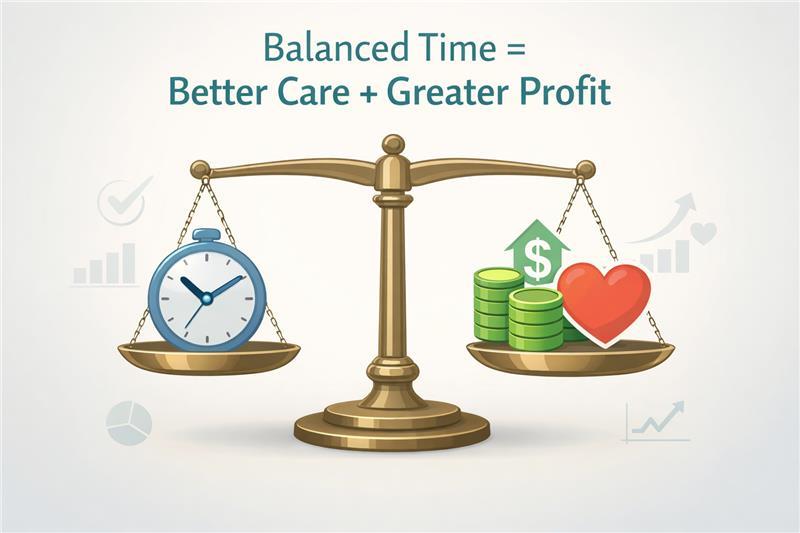
Agencies with optimized pricing & service bundles can capture higher margins without compromising care quality.
DSO measures how quickly revenue turns into cash. In home care, especially within Medicaid-heavy payer mixes, this metric determines operational breathing room.
Shorter DSO reflects billing discipline, clean documentation, authorization alignment & revenue cycle coordination.
Well-established home care agencies often target 30–45 days, depending on payer mix. Checking DSO alongside denial rates & home care EVV exceptions provides early warning signals before revenue pressure builds.
In home care, the clearest sign that you’re doing something right is simple: clients choose to stay.
Retention isn’t just a percentage on a report. It reflects trust. It shows that families feel comfortable with the caregivers coming into their homes, that communication feels steady & that concerns are handled quickly and respectfully.
Clients don’t continue services by accident. They stay because the experience feels reliable; because the caregiver shows up consistently, because questions are answered, and because they feel heard. Surveys can help capture some of that feedback.
And tools like Net Promoter Score (NPS) give you a quick sense of whether clients would recommend your agency to others. When families are willing to put their name behind your services, that says a lot.
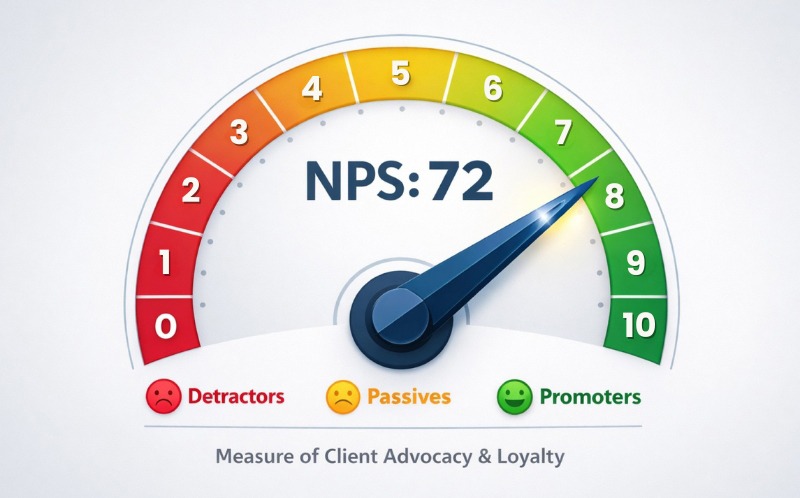
Those advocates tend to stay longer. They also refer friends & neighbors, which naturally lowers acquisition pressure and strengthens your reputation.
Scheduling seems mundane, but in home care, it binds demand to care delivery. Here are the core home care scheduling KPIs that are essential in 2026.
Fill rate measures the percentage of open care slots successfully filled with qualified caregivers. A low fill rate signals gaps in recruiting, forecasting, or internal flexibility. It not only affects your ability to serve existing clients but also your capacity to take on new business.
When overtime suddenly jumps, it’s usually a sign that something underneath the surface needs attention. Maybe the team is short-staffed. Maybe scheduling forecasts were off. Or maybe last-minute call-outs are becoming more common than they should be.
Looking at labor variance and overtime trends month over month helps you spot those patterns early. Instead of reacting when people are already exhausted or costs have already climbed, managers can make adjustments sooner; hiring where needed, balancing shifts better & creating schedules that are sustainable for both the agency and the caregivers who keep it running.
Timely, accurate documentation directly affects how & when you get paid. When notes are incomplete/submitted late, billing slows down, compliance risks increase & denials become more likely.
Agencies that keep a close eye on documentation timelines – ideally reviewing them daily – tend to catch small gaps before they turn into bigger financial problems. It also builds smoother relationships with payers because claims go out cleaner & faster.
When scheduling, EVV, care notes & billing information are connected in one place, leaders don’t have to piece together the story manually. A clear, real-time view helps teams spot delays, missing entries, or workflow bottlenecks quickly.
Waiting days or weeks for reports makes it harder to stay ahead. The sooner you view an issue, the easier it is to fix.
Now, care quality isn’t just defined by metrics, it’s validated by trust & outcomes. Execution is governed by operational KPIs; ethical excellence is reflected in quality metrics.
Tracking the rate of missed visits, incidents, or care deviations reveals systemic friction points. If these occurrences cluster around specific shifts, caregivers, or regions, they signal opportunities for instant improvement.
This is a deeper dive beyond mere visit occurrence: it measures whether caregivers complete all prescribed tasks & check-points within a care plan. Leaders who prioritize task completion are effectively protecting clinical goals & improving client outcomes.
EVV adherence, accurate documentation & clean audit logs aren’t just boxes to tick but the basics that keep agencies steady.
When these areas are reviewed consistently, billing flows more smoothly. Reimbursements don’t stall unexpectedly. Audits feel manageable instead of overwhelming.
And beyond the paperwork, this kind of discipline protects what truly matters — your revenue and your license. In home care, those aren’t risks you can afford to take lightly.
Metrics that help you manage current operations are essential but the most forward-looking agencies also focus on growth KPIs that inform strategic investment decisions.
This measures how many inquiries turn into signed clients. A high conversion rate signals effective intake processes, impactful messaging, and competitive positioning. Agencies that master intake responsiveness often capture a bigger share of the referral traffic.
Long-term sustainability depends on balancing how much you spend to acquire a client in relation to the total value that client delivers over their tenure. Tracking CAC with LTV informs marketing spend, pricing strategies & referral initiatives.
Increasing LTV while reducing CAC is the hallmark of efficient scaling.
Tracking KPIs in disconnected spreadsheets creates delay and blind spots. When scheduling, EVV, documentation, payroll, and billing live in separate systems, performance insight becomes reactive rather than proactive.
CareSmartz360 unifies these workflows into a single operational layer; allowing agencies to monitor visit completion, caregiver utilization, documentation timelines, DSO, EVV adherence, and multi-location performance from centralized dashboards.
For smaller agencies, this means fewer manual reports.
For growing regional teams, it means faster issue detection.
For enterprise operators, it means governance-level oversight across branches.
When KPIs are connected to live workflows, leaders move from reviewing reports to steering performance in real time.
KPIs aren’t meant to sit quietly on a dashboard collecting dust but to guide daily decisions.
The agencies that will do well in 2026 won’t be the ones with the most reports. They’ll be the ones who actually look at the numbers, understand what they’re saying & make small, steady adjustments based on them.
For multi-location agencies, visibility isn’t a luxury. When you’re overseeing several branches, different teams, and varying payer requirements, you need to know what’s happening without guessing.
Clear performance insight gives you that confidence. When home care leaders actively review their home care KPI reports, build consistent review routines & connect those numbers back to what’s happening on the ground, they move from reacting to problems to steering the agency forward.
These KPIs for home health care give leaders a clear view of both operational stability and financial performance. When structured correctly, they form the foundation of effective KPI management home care strategies.
Financial metrics like DSO and gross margin are typically reviewed monthly. High-performing agencies don’t just generate KPI reports; they actively manage them to identify risks early and maintain performance discipline.
Tracking retention trends, burnout indicators & exit reasons strengthens overall home care operations & protects client continuity.
Consistent monitoring supports cleaner billing, fewer denials & stronger audit preparedness. In multi-location environments, structured KPI management home care processes ensure regulatory discipline across all branches.
Download Blog

 AI Hub

