How Community Advocacy Shapes Care in Pennsylvania
00:00:08
Hello and welcome to CareSmartz360 On Air. I’m Erin Cahill, Sales Account Executive at CareSmartz360. Today’s conversation goes beyond policy and into the communities where care truly begins. Our guest, India Gerhold, is a powerful voice in caregiver advocacy and community outreach across Pennsylvania. As a mission-driven leader with deep roots in lived experience, India shares how grassroots partnerships, volunteer mobilization and local advocacy shape access to care, strengthen caregivers
00:00:37
and influence real systems change across the Keystone State. This is advocacy where care meets action. Welcome to the podcast, India. >> Thank you so much for having me. I really appreciate it. >> Well, we’re so excited that you’re here. We’ll jump right into our first question. >> Okay. Where do Pennsylvania home care agencies most underestimate the power of community advocacy today? >> Well, honestly, I think that agencies kind of underestimate uh advocacy because they see it as marketing a
00:01:03
a little bit. Um they don’t necessarily see it in the advocacy space. Um in Pennsylvania, advocacy, excuse me, is what moves reimbursement, rages, and access. Um it’s a very important tool that sometimes gets overlooked because agencies do have so many other responsibilities that they’re that they’re responsible for. Um but it’s a very important piece to keep the ball moving uh to keep the ball rolling and to get people the help that they need.
00:01:32
>> Absolutely. And how can agencies move beyond awareness and turn local outreach into measurable impact for caregivers and clients? >> So I think that uh impact shows up in real numbers, right? faster enrollments, uh, fewer miss shifts, more caregivers staying, outreach, uh, should actually solve something. It should actually address the issue and also have an answer. Um, it can’t be just an idea. It has to actually show up in real numbers. So, I think that’s probably good
00:02:02
part of what they need to start to do. Um, again, you have faster enrollments, you’ve got fewer miss shifts, and that’s I think that’s where you need to start. Mhm. And what types of community partnerships have the greatest influence on access to Medicaid services in Pennsylvania? >> Without a doubt, hospital discharge planners and social workers. Um, they shape the transition home. Um, they are, you know, they’re they’re they’re the backbone of it. Um, they they they have a they have it’s a
00:02:33
duality to the role. They have a lot of hats that they have to wear. Um and I think that they’re one of the most important keys uh to this particular aspect of it. And then you have area aging the uh agencies on aging. Uh they guide seniors into HCBS and waiver programs. Uh you got centers for independent living and so on. Community nonprofits and faith-based groups. Those are kind of like trusted messengers for families who don’t really know how they qualify or know that they
00:03:02
qualify even for that. So these partners matter most and they are the ones families meet before they even ever call an agency. Uh the care of the social workers, excuse me, um in the discharge planner. So um I think that the community partnerships, they start just right at that level where social work meets the family. >> Certainly. And India, from your experience, how can home care agencies authentically engage caregivers as advocates without adding burnout? You know, to be honest, caregivers want to
00:03:33
be heard. They don’t want to be handed, you know, a lot of unpaid shifts. They don’t want to be, you know, bogged down with a lot of additional work without support. Um, caregivers require a great deal of support because they have a great deal of responsibility. Uh, we have to keep advocacy small and meaningful as far as a caregiver is concerned. Quick stories, short quotes, simple feedback loops. uh they pay them according to the role you know that they do pay them adequately show them that
00:04:02
their input actually means something and it actually changes something you know being caregivers um I actually was a caregiver for a while not in a paid role all of my caregiving roles have been unpaid because it was for family I started out pay you know with my parents uh being a caregiver for them and then just recently you know for my husband and the burnout was was real it was very very uh it was tough it really really was my husband. I’ll just just for two seconds, I’ll tell you exactly, you
00:04:30
know where we started with him. He’s young. He was 47 at the time. Unfortunately, he suffered without getting through the whole story, a stage 4 diabetic ulcer with osteomyelitis. Um, a few months later, we find out that he has to have a triple bypass. A few months after that, he he’s septic twice. And then after that, he had um a stroke. And then just recently, an amputation. I was the sole caregiver. The burnout was I didn’t have any support. And I think that’s one of the things that drives me
00:04:59
so much to assist caregivers because whether they’re paid or unpaid, the stress and the fear and a lot of the concern was just on my shoulders just period. And I had to navigate that. So, I think it’s very important to show caregivers that they matter and even if it’s in a paid role, make sure that they’re supported, you know, in the way that they need to be supported because that was a really, really difficult place for me to be in. And so, you know, again, that’s why I do as much as I do
00:05:27
to try to support caregivers whether the role is paid or unpaid. It is very difficult to be a caregiver. >> Absolutely. And that work is so valuable like you said. >> It is. >> Yeah. And how can AI help Pennsylvania home care agencies strengthen advocacy and support caregivers without losing the human trust that care depends on? >> So what I would probably say there is that AI should not replace the human relationship at all. >> It should remove friction. That’s what
00:05:53
it should be used for. It should help with paperwork. It should help with scheduling u or you know Medicaid confusion. AI can simplify scheduling documentation like Medicaid uh issues or explanations. It can reduce some of the chaos but definitely cannot replace human connection. So it absolutely has its place. Um and those things I think that it can help with >> right. Yeah absolutely. And then my last question for you here India what advocacy shift must Pennsylvania home
00:06:25
care agencies make now to protect caregivers and community-based care this year? Let’s see. I guess we I I think that we probably should move away from putting out fires. >> Um I mean, it’s a big part of what happens. You know, you get so focused with putting out the fires that you forget to shape the system. I >> I think that a lot of that can be handled in just shaping the system to make it work for everyone. um and and in and pushing for reimbursement reform to be honest. Um simplifying CHC,
00:06:58
community- based care, it won’t survive if you don’t simplify those types of things. The shift for uh for structural advocacy, reimbursement reform, all of those things. They can’t stay, agencies cannot stay in survival mode. And that is where a lot of them operate now. That’s where they’ve been operating. We have funding that’s been reduced. We have a lot of different, you know, strings, like a whole lot of stuff that they have to go through. Um, but I think that what they have to do is just let’s
00:07:26
focus on shaping the system. Not so much putting out fires, even though I know, you know, it’s better, you know, you can say that, but you do have to put out the fires, but shaping the system, I think, would be the best thing to do. >> Absolutely. Well, India, thank you so much for your insights. We really appreciate you taking the time to be on the podcast. >> I appreciate you having me. Thank you. And for all of our listeners, thank you for tuning in to CareSmartz360 On Air and we will see you next time.
00:07:52
Thank you.
 07:56 MINS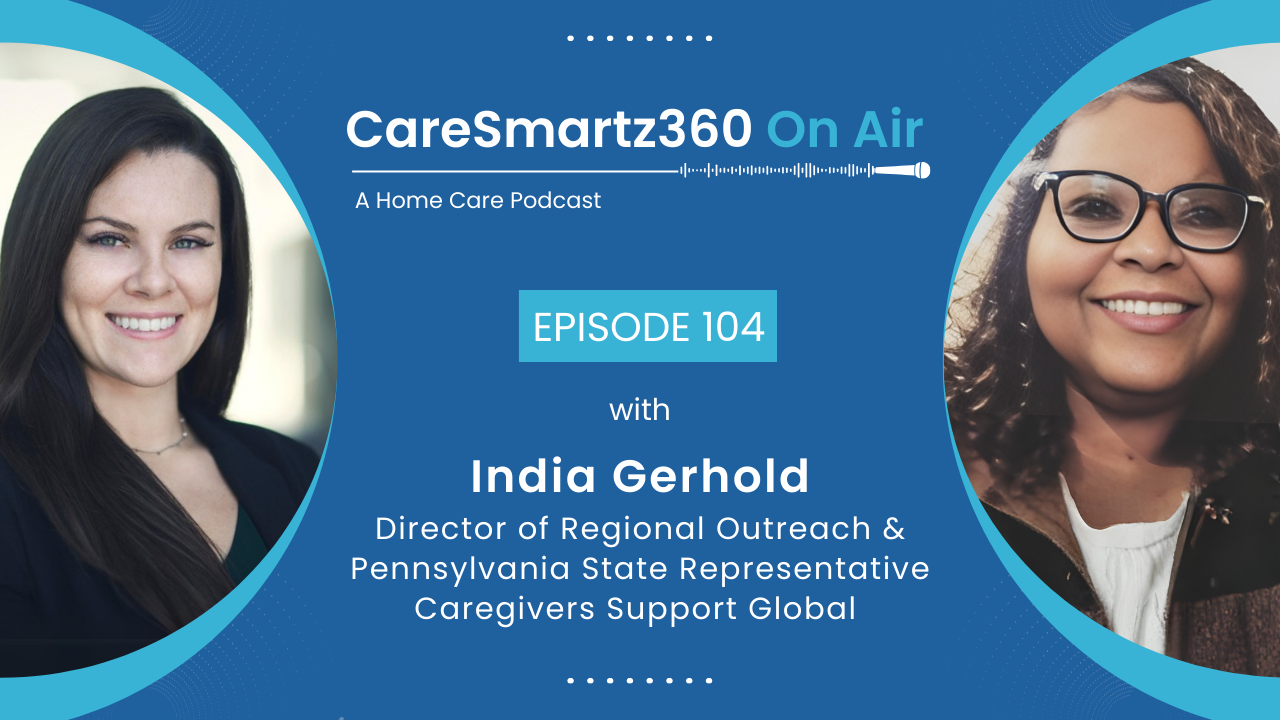


 AI Hub