Blog
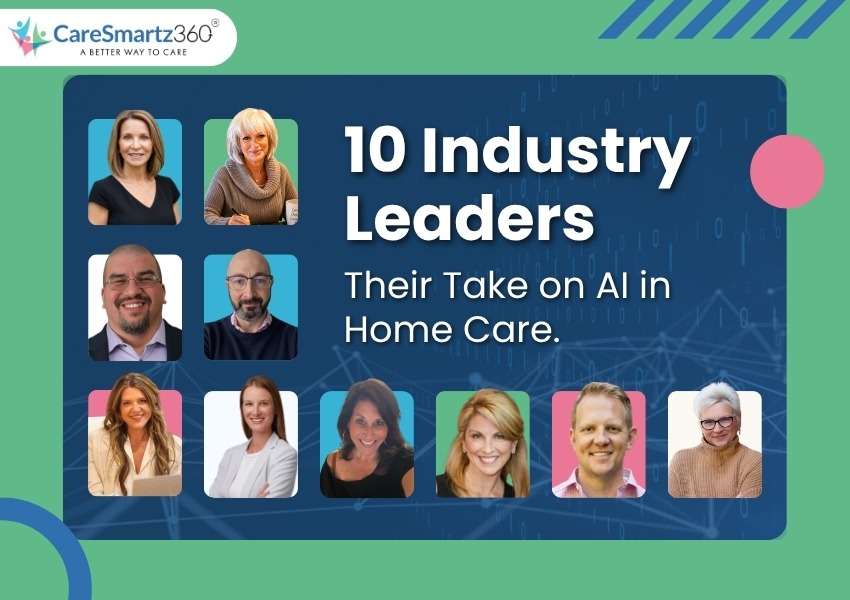
Home care agencies are facing a difficult reality.
Demand for care continues to rise, caregiver shortages remain a challenge, compliance requirements are growing more complex, and operational teams are being asked to do more with limited resources.
The workforce pressure alone illustrates the scale of the challenge.
The U.S. Bureau of Labor Statistics projects approximately 765,800 openings for home health and personal care aides every year over the next decade, making it one of the fastest-growing occupations in the country.
-Bureau of Labor Statistics
At the same time, agency leaders are looking for ways to reduce administrative burden without sacrificing care quality.
That is where AI-powered home care software is entering the conversation. Agencies are increasingly exploring AI to improve efficiency, strengthen compliance, support caregivers, and manage growing operational complexity without sacrificing quality care.
But what does AI actually mean for home care?
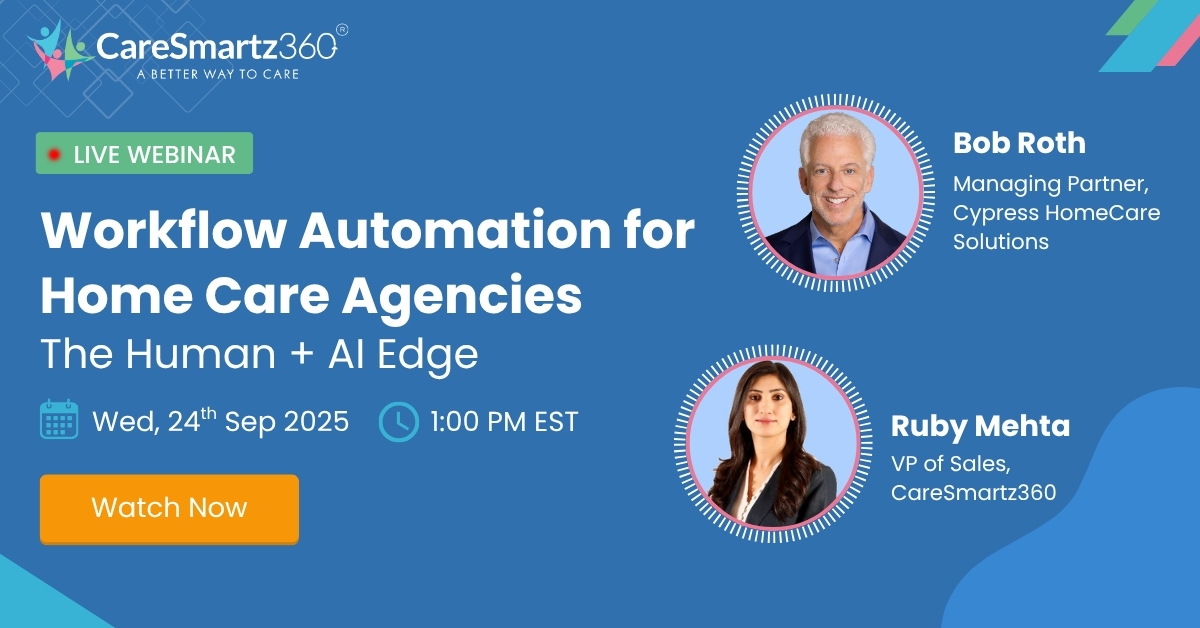
To answer that question, we asked 10 home care leaders, consultants, operators, and industry experts to share their perspectives.
Their responses reveal a consistent theme:
AI is transforming operations – but the future of care remains deeply human.
How is AI reshaping home care operations?
According to 10 home care leaders and industry experts, AI is helping agencies:
Key Takeaway
Experts agree that AI is in fact, becoming a powerful operational tool for scheduling, documentation, compliance, recruitment & decision-making. However, empathy, trust, judgment & relationships remain at the heart of quality care.
While much of the AI conversation begins with efficiency, the experts we spoke with see its impact reaching far beyond administrative workflows and into nearly every aspect of home care operations.
Many agencies first encountered AI through scheduling tools and workflow automation.
According to Matt Hansen, Executive Director, Home Care and Hospice Association of Colorado, the impact is already extending much further.
“I see AI remodeling the back office. We’re already witnessing its impact on intake and scheduling. As confidence levels continue to increase, I think we’ll see AI used by agencies more for coding & chart auditing as well.”
As more agencies adopt AI caregiver scheduling, intelligent intake workflows & documentation automation, AI is becoming more of a practical operational tool rather than an emerging concept.
His observation reflects a broader trend across healthcare, where organizations are increasingly exploring AI to reduce administrative workload and improve documentation processes.
But operational efficiency is only part of the story.
For years, many operational decisions in home care have been reactive.
Problems are often addressed after they occur.
Casey Rausin, CEO and Facilitator at HOMECAREceo Forum, believes AI changes that dynamic.
“One key shift in AI for home care and care management is moving from reactive documentation to proactive insight.”
Instead of simply recording events, AI can help identify trends, flag risks, and support earlier intervention.
This represents one of the most important home care technology trends emerging today. Instead of simply recording what happened, AI can help agencies identify potential issues before they affect caregivers, clients, or operations.
The demand for home-based care is increasing faster than workforce availability.
That reality is why Renee Picard Walsh, Executive Healthcare Consultant at RPW Consulting, sees AI as a strategic necessity.
“We cannot meet tomorrow’s care needs with yesterday’s systems — AI is essential for scaling quality, continuity & operational resilience.”
For growing agencies, technology is becoming less about convenience and more about sustainability.
Yet not every expert views AI through the same lens.
While many experts see significant opportunities in AI, they also emphasize its limitations.
Lindsay Polis, Founder, Finding Homecare, offers perhaps the strongest reminder.
“Caregiving is human.”
She argues that compassion, emotional intelligence, intuition & trust remain central to caregiver placement and family support.
AI can process data.
It cannot evaluate character, understand family dynamics or provide reassurance during difficult moments.
For home care agencies, that distinction matters. That creates an important question for agency leaders.
Valerie Darling, Founder, Home Care Matters, believes AI is evolving from a support tool into an operational advantage.
“AI isn’t replacing home care – it’s strengthening how it’s delivered, priced, staffed, and managed.”
For many growing agencies, adopting AI-powered software is becoming a strategic investment that supports workforce management, operational visibility & long-term growth.
Those benefits become increasingly important as margins tighten and workforce challenges continue.
The impact goes beyond documentation and scheduling.
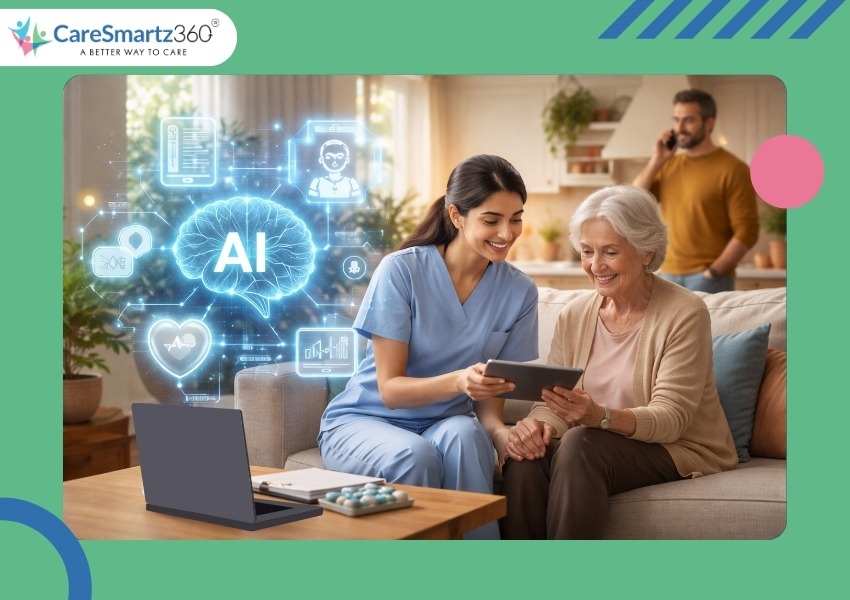
Discover how agentic AI can proactively manage scheduling, compliance monitoring, workflow coordination, and operational decision-making to help agencies scale more efficiently.
Technology can improve workflows.
But growth still depends on trust.
According to Gabrielle Pumpian, CEO & Founder, Trail Angel Partners:
“AI will streamline documentation and workflows, and the leaders who pair that efficiency with trusted relationships & strong market positioning will be the ones who will drive the future of home care.”
The message is clear.
Operational improvements create opportunities.
Relationships create growth. This is where technology and human connection must work together.
One area where AI continues to gain attention is caregiver-client matching.
Andrea Levine, Founder, Senior Companion Services, sees meaningful value in using technology to support better alignment.
AI can help evaluate:
Combined with AI caregiver scheduling, these capabilities can help home care agencies improve continuity of care while reducing manual coordination efforts.
However, she cautions that technology should remain behind the scenes.
The caregiving experience itself should stay personal and relationship-driven. For many agencies, that distinction will define success.
Many experts echoed a similar theme.
Charlotte Thibault-Balluff, Independent Business Owner, A Place for You Placement and Consulting, believes agencies should focus on enhancing human interactions rather than replacing them.
“The agencies that get this right will use AI to remove friction, not create distance.”
Families rarely remember operational efficiencies.
They remember how supported they felt during the very difficult moments.
That is where human connection continues to matter most.
Yet operational improvements remain impossible to ignore.
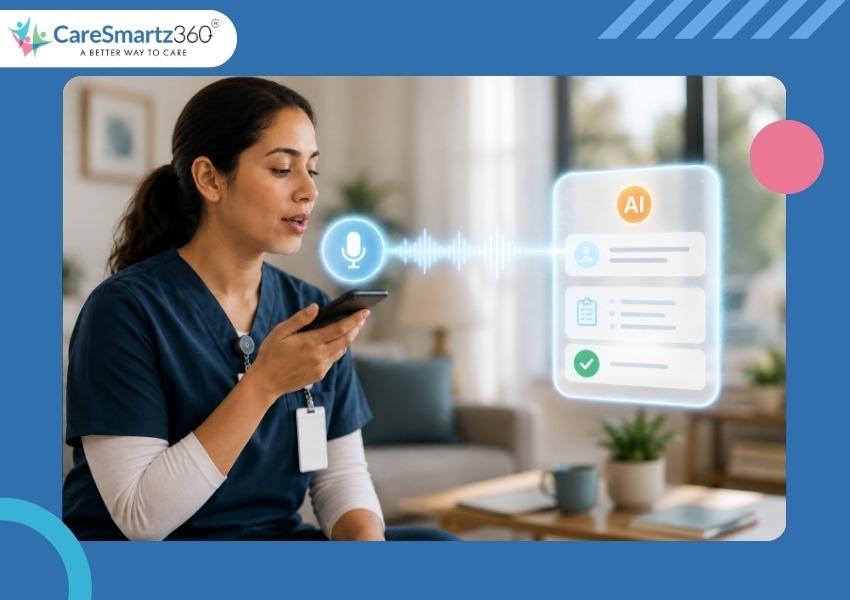
Documentation is one of the biggest hidden operational burdens in home care. Learn how AI-assisted note rewriting and voice-to-text technology can help caregivers complete notes faster, improve consistency, and reduce administrative fatigue.
Perhaps the most operationally focused perspective came from Julio Briones, CEO, Briones Consulting Group.
He believes AI will reshape:
And we can say that his prediction is especially relevant given today’s workforce challenges.
With hundreds of thousands of caregiver openings projected annually, agencies need smarter ways to recruit, engage, and retain staff.
AI-powered screening, predictive retention models, and workflow automation could help agencies reduce turnover while improving operational efficiency. As workforce shortages continue, many agencies are exploring AI-based software to support recruitment, retention, scheduling, compliance monitoring, and profitability improvement within a single operational framework.
Ultimately, the most successful AI strategies will support – not replace – human decision-making.
The final perspective comes from Matt Field, Owner and Managing Partner, Right at Home of North Suburban Chicago, Hinsdale, & Orland Park.
His view reflects the balance many leaders are seeking.
“When implemented with intention, AI strengthens the human side of care rather than diminishing it.”
He points to opportunities for identifying concerning patterns, flagging risks & supporting earlier intervention.
Rather than replacing caregivers or office staff, AI can help them focus on higher-value work that requires experience, communication & critical thinking.
Documentation remains one of the most time-consuming administrative responsibilities in home care. Modern AI documentation tools for caregivers, including voice-enabled note entry & AI-assisted note rewriting, may help reduce manual effort while also improving consistency.
CareSmartz360 supports faster, more consistent documentation with built-in voice-enabled note entry & AI-assisted note rewriting. Caregivers can dictate care notes using their device’s microphone and optionally use AI to improve note clarity, grammar & readability before submission.
These tools help reduce typing effort, improve documentation quality & support more consistent, audit-ready care records without changing existing caregiver workflows.
Evaluate where open shifts, overtime exposure, travel time & continuity-of-care challenges are creating daily pressure.
Analyze turnover trends, onboarding experiences, caregiver engagement & scheduling stability.
Review how your agency monitors documentation completeness, credentials, EVV requirements & audit readiness.
Prioritize operational challenges, define measurable goals & focus on solutions that support caregivers & office staff.
Thinking about adopting AI in your home care agency?
Before investing in AI, assess the operational areas where it can create the greatest impact.

AI Readiness Score
Rate your agency from 1–5 in each category:
35–40: Ready to scale AI initiatives.
20–34: Opportunities exist to improve efficiency & visibility.
Below 20: Strengthen operational foundations before implementing any advanced AI tools.
Across all 10 expert perspectives, one conclusion stands out.
The future of home care is not AI versus humans.
It is AI supporting humans.
The agencies likely to benefit most from AI will not be those trying to automate caregiving.
They will be the organizations using technology to:
Meanwhile, trust, empathy, accountability & relationships will continue to remain the foundation of exceptional care.
Technology can make agencies more efficient.
People make care meaningful.
Want to see how AI-assisted note rewriting and voice-to-text care notes can support your agency? Schedule a personalized demo.
Download Blog

 AI Hub