Blog
November is National Family Caregivers Month — a timely opportunity to acknowledge the invisible backbone of America’s long-term care system.
Today, approximately 63 million Americans—nearly one in four adults—serve as family caregivers, supporting a loved one who is aging, disabled, or managing a chronic condition.
– Zen Caregiving Project
These caregivers juggle emotional, physical, and logistical responsibilities, often without formal training, while balancing jobs, children, and their own lives.
A recent report found that 67% of employed family caregivers report difficulty balancing work with caregiving responsibilities; 27% of them have reduced work hours, and 16% have turned down a promotion to manage care. – MediaRoom
The weight of this role is tremendous: family caregivers provide unpaid support that is worth hundreds of billions of dollars annually. – otsuka-us.com
So what difference does home care technology make in this context? It isn’t just about apps or dashboards—it’s about restoring time, clarity, and connection to someone who shouldn’t feel alone in this journey.
Real-time mobile platforms let agencies and families share one source of truth: scheduled visits, check-ins, status changes and documentation. GPS-enabled caregiver apps show families when a worker arrives safely.
Analytics can flag missed visits/risky patterns early. Multilingual, intuitive apps break down barriers so caregivers & families don’t struggle with confusing tools or any fragmented information.
For agency leaders and operations managers, the message is clear: when you deploy technology and home care that truly connects agency, caregiver and family—not as separate silos but as a living ecosystem—you improve care, you build trust, and you create a scalable, resilient operation.
Because at the heart of this transformation is a human being doing the heavy lifting—someone trying not to fail the one they love. This November, as we honor those caring behind the scenes, consider how your agency’s choice of senior home care technology may transform not just workflows—but lives.
Family caregivers are the unsung backbone of long term care in America. These caregivers are often part of the “sandwich generation,” caring simultaneously for aging parents and children, while holding down jobs.
They report high rates of stress and burnout: one survey found over 60% of caregivers say their role increases their own stress and worry.
– Caregiving Crisis in America Keeps Growing
The challenges are both practical and emotional. Families must manage complex medication schedules, coordinate multiple care providers, and track medical bills — all on top of daily life. Any missed appointment or overlooked symptom can feel catastrophic.
Home care agencies interact closely with family caregivers every day. When a parent hires an agency, often it’s the adult child or spouse who liaises with schedulers and caregivers.
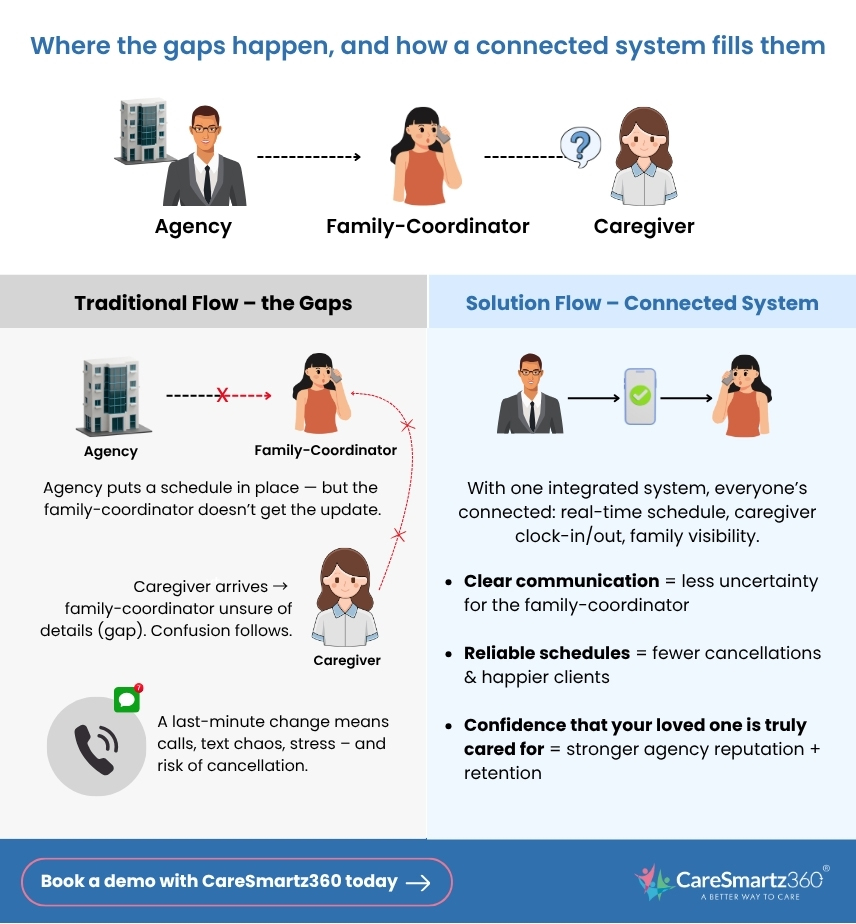
These family coordinators need clear communication, reliable schedules, and confidence that their loved one is truly cared for. Unfortunately, outdated tools (paper schedules, phone tag, piles of paperwork) often make things harder. Burned-out family caregivers can lead to last-minute cancellations, dissatisfaction, or even the loss of a client. In short, stressed caregivers harm both the families and the agencies serving them.
Thankfully, today’s technology for family caregivers offers powerful solutions. Imagine the “smart home” ideal: sensors that alert a caregiver when Dad forgot to take his medication, telehealth video calls replacing an extra clinic trip, and easy-to-use mobile apps that send family members a live update after every visit.

CEO, Comfort Keepers Of Delaware County, Montgomery County & Chester County
As he observes, tools like wearable sensors, AI-driven monitoring, & telehealth platforms are empowering families and caregivers with unprecedented levels of safety, efficiency, and real-time insight.
These innovations let caregivers (and family members) know what’s happening at home without constant phone calls. A tablet video check-in or a text notification after a care shift can replace hours of family stress over “Did everything go OK today?”
That said, technology adoption among caregivers still has room to grow. In one study, 76% of caregivers owned smartphones, but only 40% actually used any caregiving app or digital tool.
Report: 40 Percent Of US Caregivers With Smartphones Use A Care-related App
In other words, many families aren’t yet tapping the tools at hand. Home care agencies can bridge this gap. By providing caregivers and families with intuitive apps and portals, agencies can bring them into the digital age, replacing anxiety with assurance.
Which precise features make a difference? An effective home care platform should include:
Intelligent scheduling ensures every shift is planned, matching the right caregiver to every client. EVV confirms visits in real-time, so the family members know the caregiver arrived & left, as expected.
If EVV flags a missed clock-in, the agency can respond immediately, preventing an unmonitored lapse in care.
CareSmartz360’s ad-hoc scheduling allows caregivers to pick up one-time shifts easily through our mobile app. It strikes the perfect balance: caregivers gain flexibility, and clients get the care they need when needed.

A dedicated portal (web or app) gives families access to everything in one place. Such a portal provides clients & their families with access to vital information like schedules, invoices, and agency communications in one place, promoting transparency and peace of mind.
This 24/7 access replaces frantic phone calls and a paper trail with one dashboard. Indeed, agencies have found client portals can lead to faster communication and extremely high family satisfaction.
Similarly, caregivers use a smartphone app to manage their day. They can view upcoming visits, document care tasks (like vitals or a shower), & receive alerts on-the-go.
If the loved one has an emergency, the caregiver taps the app to notify the office and family simultaneously. This two-way mobile communication ensures caregivers can focus on caring, not paperwork, and families stay informed in real time.
Consistency of care builds family confidence. Integrated caregiver learning tools (on-demand videos, quizzes, and checklists) help agencies train new aides quickly on a client’s unique needs.
Targeted, bite-sized training – especially about a loved one’s condition – boosts both caregiver confidence and family trust. When a caregiver knows exactly how to use Grandma’s oxygen tank or soothe grandpa’s restless leg syndrome, the family’s anxiety plummets.
Agencies that make training a priority often see better retention too.
Digital assessments and care plans ensure no detail is lost. Family members can contribute vital information (like favorite foods or past injuries) via secure forms, & see the resulting care plan online.
For instance, a family caregiver might enter “Dad is afraid of falling at night” so the schedule includes midnight checks. This tailored planning means families feel heard and clients get safer, more personalized care.
Streamlined billing and analytics also benefit families. Transparent invoices (delivered through the portal) prevent surprise charges, and agencies can quickly run reports on service hours or client progress.
This data-driven insight helps agencies spot needs early – say, noticing Mom’s care hours increasing – and coordinate services before a crisis.
Collectively, these features create “one dashboard for a quick view” of everything a family needs.
When scheduling, documentation, billing, and communication are centralized, the entire care team (agency, caregiver, and family) operates in sync.

Forward-thinking home care agencies are investing in all-in-one home care technology suites that tie everything together. CareSmartz360 offers a cloud-based platform designed for home care agencies, with built-in scheduling, EVV billing, client intake, electronic care plans, mobile apps, and an advanced AI Hub:
This November, as we celebrate National Family Caregivers Month, let’s recognize that caring for caregivers is a two-way street. Families of vulnerable seniors deserve our gratitude and our support.
By embracing smart caregiver support tools and technology for family caregivers, home care agencies can become allies to these families – lightening their load with every click. In the end, technology and home care isn’t about gadgets – it’s about people. It’s the practical way to say, “We see you, family caregiver, and we want to help.”
Download Blog

 AI Hub

