Strategic Priorities for Home Care Leadership in 2026
00:00:09
Hi there listeners. This is Dennis Gill, your host for today. And uh today we have with us Ryan Obsuszt, Vice President of Sales at OK Alone. So, as home care leaders prepare for 2026, Ryan shares sharp insights on what truly deserves executive attention, caregiver safety, operational accountability, scalable growth, and risk reduction. What should leadership prioritize as complexity rises across locations and pay sources? So tune in today for a candid conversation on building resilient future ready homecare
00:00:51
organizations. So welcome to the podcast Ryan. >> Awesome. Yeah thanks for having me. >> Oh we’re really glad you were able to give us some time today and our listeners would really like this session should be helpful for them and uh they should learn more about it. Okay I’ll without wasting any time I’ll straight away jump on with my first question for you. So Ryan, where does agency’s people strategy fit into these priorities to stay competitive? >> Yeah. No, I I think a big thing with
00:01:25
that is, you know, a strong people strategy isn’t just uh one of the priorities. It’s really the foundation uh that holds all everything else up within the organization. So in home care specifically, uh your workforce is your service. So agencies that invest in recruiting, development, and protecting their workers are the ones that really stay competitive. You know, I’ve seen um obviously we look at things from a safety lens as as a as a safety provider in the home care space, but um you know,
00:01:55
we’re seeing that attrition stats are over 80% in the home health care space and a lot of that is due to workforce safety out in the field. Um, so yeah, we’re really seeing like with some organizations I’ve spoken to over, you know, over even just the past few months where uh they’re really trying to find creative ways through benefit packages and really focused on culture. Um, and they’re actually seeing that there isn’t a massive attrition issue uh in some of those organizations just just really
00:02:25
trying to find ways to differentiate yourself outside of, you know, pay and things of that nature. >> Oh, okay. Okay. Got it. Got it. And what role should technology and data play in strategic planning according to you? >> Yeah. So you I think technology and data should be really the engine uh behind smarter and more effective operations. So for example um data can identify safety risks with what we do. Um so that’s like which which neighborhoods are you providing services in time of
00:02:57
day client conditions uh and that can all correlate to higher incidents. Um we really want organizations to be proactive not reactive. So preventing a near- miss incident from a serious incident is is vital for us. >> Um and mo more often than not you know organizations and home care providers uh agencies they come to us because there have been serious incidents to caregivers out in the field. So what are some ways that we can help uh improve that? And I think the number one thing that organizations want when it comes to
00:03:32
software and protecting their staff is um is integration. So being able to integrate into EVV, scheduling platforms, EMR systems. Um you know safety should be something that is at the forefront, but also we don’t want it to be something where it’s you know hindering their productivity and things of that nature. And you may you may or may not hear this all the time, but app fatigue and solution fatigue are a real thing. You know, organizations, they don’t want to use multiple softwares, multiple platforms, multiple
00:04:04
apps. >> I’ve heard that. >> And I really think Yeah. And I really do think that um that helps improve adoption for not only just what we do, but with other platforms is you need that those high adoption rates to get the buyin that you need. Um, and then there’s things like mobile apps can keep workers connected. So, reporting hazards in real time and accessing support quickly is essential. And then there’s the analytics that can guide staffing decisions. So, training needs and
00:04:32
resource allocations like how much time as a supervisor are you spending um, you know, checking in on your staff when they’re doing an inhome visit, whether you’re in hospice, hospice care, home health, whatever you’re doing out in the field. you know, how much time is that immediate supervisor really checking in on that that employee. So, um I think the data that is is essential and and these are just a few things that um that really help support that. >> Okay. And how can agencies balance
00:05:00
growth with staffing and cost challenges? >> Yeah. Um you know, I think one is, you know, in in home care, it’s aligning expansion with workforce uh capacity. So, one is just improving retention, um, which is far cheaper than constantly recruiting. Um, you know, there’s a really high cost with recruitment and training and things of that nature. So, being able to improve those retention rates are are vital. >> Um, but also investing in safety and well-being. So, kind of like what I was
00:05:34
talking about, reducing injuries, turnover, um, absent employees who aren’t providing care because they don’t feel safe out in the workforce. Um there’s a there’s actually a pretty cool stat where or not it’s I wouldn’t say it’s a cool stat but it’s just like eyeopening is studies report that up to 87% of home health care workers have experienced workplace violence during their careers >> which is >> which is a massive stat. you know, healthcare and social assistance
00:06:02
professionals constantly suffer higher numbers and rates of workplace violence. Um, with women experiencing almost five times as many instances as men. Um, which really shows that, you know, when you’re going out into the field and providing vital services, like your safety is also equally as important. Um, and it’s also using that technology like we talked about is, you know, reducing overtime and unnecessary travel. Um so when agencies grow within strengthening their workforce um you usually they end
00:06:33
up with burnout, inconsistent care and really higher costs. Um so you’re pairing that that people strategy that you have but also become um sustainable as an organization beyond that people aspect. >> Okay. And just continuing uh to this question that what can be the impact of not addressing like the things that you’re saying that some of the safety and well-being challenges that home care staff face? >> Yeah, I mean I think the the consequences are real and and they compound quickly. So you know agencies
00:07:06
and organizations ignore safety um and the well-being they’ll see higher injury rates within their workforce. So, from lifting, falls, unsafe home conditions or environments that they go into, uh burnout and turnover, which drives up costs and then also disrupts client care, which is the most important part. Um, and then lower quality of care because one, they’re stressed out in the field. Um, there’s potential injuries that could happen while they’re working by themselves out in the field. Um, and
00:07:35
they can’t perform at their best. And then the reputational damage of these organizations plays a huge part. So it makes recruitment even harder which you know we talk about attrition rates in in the space and things of that nature like reputational damage is is equally as important because if you don’t have that and you’re struggling with recruitment like what are ways that you can differentiate yourself um and then regulatory and liability risks you know especially if an incident goes unressed
00:08:02
like how do you handle that from a compliance perspective? Um, >> so ultimately, you know, failing to protect workers means failing to protect your your clients and um, you know, safety really isn’t a nice to have. It’s it’s something that, you know, you need to to do to prioritize uh, your workforce and and really their well-being out in the field. >> Yeah, definitely. And adding to this only uh, the next thing is about that what are the some of the challenges that home care staff face traveling to and in
00:08:32
patients homes? >> Yeah. So, um I would say home care workers navigate risks the most uh out of health care professionals that really it comes down to travel hazards. So, you know, they’re traveling long distances, unfamiliar neighborhoods, poor lighting, unsafe parking conditions. Um you know, especially if you’re looking at the landscape of of North America, like people are working in various demographics and areas where um they might not have the support that they need internally. Um, weather conditions
00:09:05
actually play a serious factor in that. Um, especially for workers who rely on on public transportation potentially. Um, and then entering unpredictable environments where hazards can include clutter, pets, smoke, um, pests, unsafe family dynamics. You know, I’ve heard of situations of of nurses going into someone’s homes and being bit by a stray dog. you know, like things like that actually happen out in the field where it’s not something you account for because you’re the information you’re
00:09:33
given is really around the patient and and their needs. Um, but it’s the environment around them that actually becomes a higher risk for for a lot of people in the space. Um, and then really just working alone. So, without immediate backup, if something goes wrong, what happens? How are you accounting for those individuals? Um, and then the physical strain. So lifting, assisting clients without proper equipment, um you know, these challenges really make safety protocols, communication tools, and real-time
00:10:04
support uh essential when they’re when they’re working out in the field. >> Okay. And finally, where do coordinators, supervisors, and office staff fit into all this? >> Yeah, I mean, I think they’re, you know, they’re really the backbone of uh safe and effective home care systems. So setting realistic schedules so it’s reducing that fatigue and travel risk if they’re overbooking a lot of these appointments and um and care that they’re providing >> um and responding quickly to safety
00:10:35
concerns. you know, I think it’s equally as the responsibility of the worker as it is the the supervisor that, you know, escalating issues when needed and accordingly is is vital because, you know, if the caregiver is working out in the field and they’re in need of immediate assistance, that supervisor should know what, you know, what’s really happening when they when they leave their homes. Um, and then I think providing training and coaching um to those workers in the field so they know
00:11:02
how to handle certain situations. Um I know a lot of providers do like deescalation training and things of that nature where um if they are in a you know a sticky situation with a um a patient’s uh family member or the patient themselves like how to really remove yourself from that situation while also still you know providing care to those who need it. And um it’s really that that balancing act that’s important. Um, and then really just creating a culture where workers feel heard and respected and protected. Um,
00:11:35
kind kind of like what I was talking about is, you know, this is really something that I’ve heard where organizations are reactive to incidents that occur to um their caregivers out in the field. Um, but you really need to listen to those individuals. Is this a concern? Is does safety get brought up um to that? And that’s why I think prioritizing safety within the organization ultimately affects your attrition rates, your turnover, um employee satisfaction, like it it really is is kind of the groundwork for that.
00:12:07
Um so yeah, I would just, you know, for anyone anyone listening, just really try to understand, you know, is safety a concern for for people out in the field and does this get brought up frequently and really find if there’s there’s other ways for you to to help promote a safer working environment for everyone. Oh great, great great great. It was really an eye opener some of the things that you told us uh our listeners the even if the home care agency owners are listening or even if any the homecare
00:12:36
providers that they are there they’re going in for the shifts it’s really an eye opener for them. So thank you for your time today Ryan and you took time today for our listeners and uh thank you everyone for tuning in. This is uh Dennis Gill, your host uh signing off. Meet you next time. Thank you.
 12:59 MINS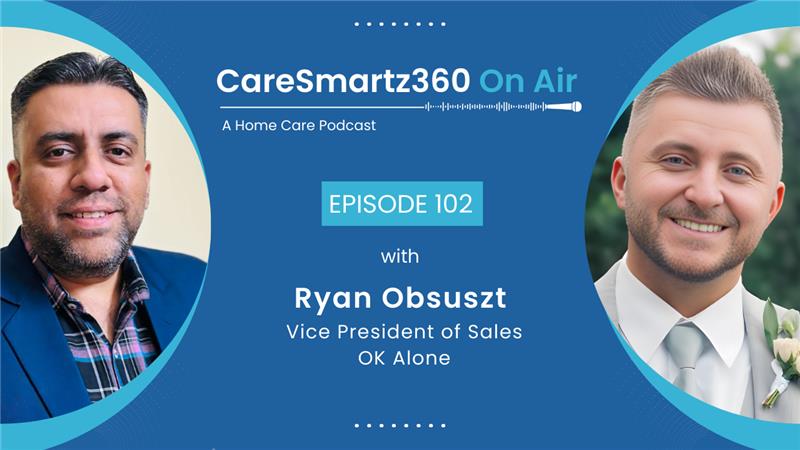


 AI Hub