Why Most Caregiver Training Fails and What Works Instead
00:00:09
Hello and welcome to CareSmartz360 On Air. I’m Dennis Gill, Senior Sales Consultant at Caresmartz. Today we welcome Vicki-Demirozu, a passionate healthcare leader and the force behind giving care with grace to unpack a very critical question. Why do most caregiver trainings fail? So, with a deep focus on peer-driven education and real world application, Vicki shares what today’s caregivers actually need to succeed and stay from soft skills to meaningful engagement. This conversation explores how better training doesn’t just support
00:00:52
caregivers, it transforms care outcomes across the entire agency. So, welcome to the podcast, Vicki. >> Thank you so much, Dennis. What a pleasure to be here today. Thank you. >> We are really glad that you were able to make up the time today for our listeners and we hope this is a very fruitful and a brilliant session for all our listeners. Okay. So, without wasting any time, I’ll straight away jump in with my first question for you. Uh so, we keep many
00:01:20
agencies invest in training, right? So, yet still struggle with the caregiver performance and retention. Where do you think most training programs go wrong? >> Right. I think really and truly so much of the training is compliance and technical skills focused and we know that caregivers have to have that technical piece in order to deliver the physical care to their clients and their patients. >> However, oftentimes that’s really where the training stops. It’s it’s it’s a
00:01:53
It’s a technical component and there is a lot of focus on compliance which certainly is also very very important. However, it’s that people do their job as human beings, right? That sometimes and often times we don’t spend as much focus on. >> Okay. Got it. Got it. So the focus should be more on the human side of it, right? >> Absolutely. Okay, perfect. And from your experience, what’s the difference between the training that caregivers complete and the training that actually changes the
00:02:31
behavior on the job? >> Right. So, we know that when a situation occurs with a patient or a client and the caregiver, often times they react >> based on what they have known from before. They’re they’re reacting based on life experiences. >> Got it. >> Not rituals. And I think that’s something that we really need to think about because with that focus and and training is phenomenal. Don’t get me wrong. I am I am the biggest proponent for that. I don’t believe that there is
00:03:08
what I’m trying to say is there is more of a gap, right? because we’ve got the technical piece over here, >> but how are we actually changing behavior when we’re just teaching that technical piece, right? It’s like if you’re suddenly startled in a situation with someone, >> you don’t always think back to module number three, >> right? >> You react based on your life experiences and your exposure. And so what we’ve got to do is to quit um not quit but reframe
00:03:42
how we focus instead of training it’s really development and coaching. >> Yep. Coaching and development and soft skills like empathy and communication are often talked about but really rarely very rarely mastered. So why are these so difficult to train effectively in homecare according to you? >> Right. Well, I think part of it is because we don’t really emphasize it. Um, we say, you know, you have to do this and you have to do that and you have to clock in and and again, back to
00:04:13
that >> compliance motion. And let’s face it, with all of our technology, which is phenomenal, by the way, I think it’s really improved so many processes, >> but we don’t see folks as much anymore in our business. People may see them one time and so how do you how do you um really focus on the empathy and the communication when you’ve only been with them one time and that interaction isn’t necessarily mirroring that because we’re so busy trying to get the documents and the
00:04:50
papers and the training and I always say you have to mirror the behavior you desire >> emotional connect is missing That definitely does miss. >> Yeah, that has to be trained. That has to be done. And uh how can agencies design training programs that engage both new and experienced caregivers without overwhelming or disengaging them? >> Right. Well, I think you know we all have different life experiences. We all have different experiences. We have different cultures. And that’s the
00:05:24
beauty of caregiving is we have such a blended group of individuals providing this care but at the end of the day we have to provide examples that resonate with them. >> Yeah. >> And again because when something happens in a situation they’re thinking back from their perspective or their experiences. And we know that culturally and generationally we’re dealing with today we have eight different generations four of which are in the workplace. So when you think about that we all have had you know a lot of
00:06:00
different things going on. And so we’ve got to really equip them with different experiences. >> Got it. >> And different types of exposure that they may not have had. >> Yeah. differently that has to be handled differently according to the individual it should be different and that thing I definitely agree with you that obviously they will whenever they will react they will react according to their own experiences they won’t remember that they learned this thing from this book
00:06:27
or this thing from over there that I can completely get that >> right they want to see it they want to hear it from people that have been in their shoes and that’s why the peer component is so important and not just with the seasoned experienced caregivers but often times We like to blend the newly emerging caregivers so that the seasoned and u more experienced caregivers can understand what their perspective is. Back to the generational component. When you’ve you know you’ve
00:06:54
got the baby boomers on one side and then Gen X different generations together. We don’t all process information the same way. We don’t all value the same things in the same order. And so it’s been really interesting to to bring the two groups together to have those collaborative discussions. >> Yeah. And every every generation according to that they will react differently for a similar situation. So obviously >> absolutely. >> Yeah. It does differ. >> Yeah. And their values and and what they
00:07:23
respect and what they react to aren’t always the same either. >> Yep. Yep. Yep. Definitely. Definitely. And uh the main thing with AI AI and automation entering homecare now. How do you see AI supporting or potentially limiting caregiver training and development? >> Right. I think you know AI is an absolutely incredible support system for all of us. Yeah. >> But but it doesn’t always or necessarily have the ability to develop how somebody shows up. >> Yeah. And truly at the end of the day,
00:07:59
how an individual shows up >> to that assignment or that shift or that care opportunity, that’s really what matters because again, at the end of the day, you can have those technical skills and you can transfer a patient, but if you don’t do that with, as you were saying, the empathy, the compassion, the appropriate communication skills, it falls flat. >> It falls flat. Yeah. >> Yeah. And AI I think gives a lot of opportunity from the standpoint of efficiencies from helping companies
00:08:30
really get that higher to work very very quickly. We’ve speeded up a lot of different things with instant pay, same day pay, a lot of things like that. But at the core, >> my belief is that AI will never ever replace that human touch. >> Yeah. Obviously because AI is also there. It obviously it is easing our work culture a little bit but it cannot replace a complete human being and do everything what and specifically I would say in the homecare side because in this place empathy and emotional touch is
00:09:03
required >> right >> and lastly as we look ahead to 2026 >> what shifts do agencies need to make now in caregiver training to stay competitive and improve both retention and care quality from compliance to capability. That’s huge, right? The compliance is there, but the capabilities that the individuals doing this have and and it’s even in our phrasing of how we do it and from training, we’re going to train you. >> We want to help develop you. We want to help develop your skills. share with me
00:09:38
Where are some things that you would like to feel more confident about because when you develop an individual their confidence builds and when people are confident in what they do they don’t automatically go back to that long-term way of thinking. When they feel confident they employ the things that they’ve learned from our development training not training but the development and um growth >> development the growth. Yeah. Uh-huh. So yeah, it was thank you. Thank you for your time today, Vicki. It was
00:10:14
great talking to you. I know this was a small session for our listeners today. We would definitely love to have a much longer conversation with you uh with this topic or some other topics in the near future and so that our listeners can benefit from all the great experience that you have in this industry. >> Thank you so much, Dennis. What a pleasure. >> No, thank you. Thank you. And thank you to all my listeners. Uh this is Dennis Gill signing off and I’ll be back with you shortly then. Thank you.
 10:46 MINS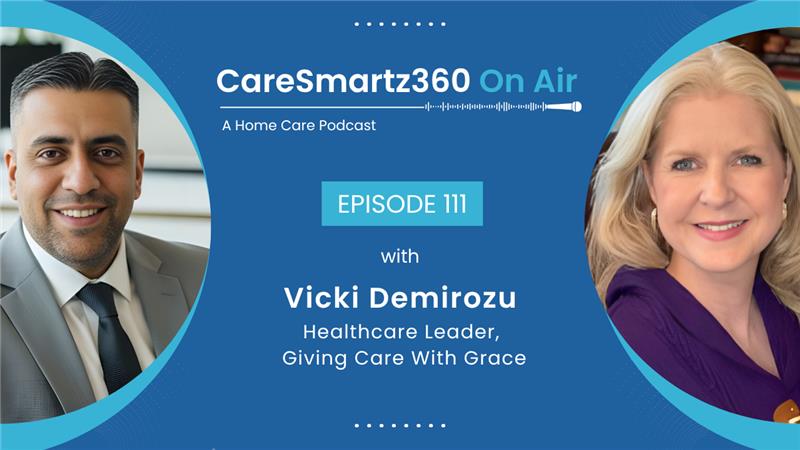


 AI Hub