How to Vet a Home Care Agency
00:01
Hello dear listeners. Welcome to CareSmartz360 on Air, a Home Care Podcast. I’m Erin Cahill, Account Executive at Caresmartz. Today we’re joined by Rebecca Rangel, owner director at Goldstar Homecare to dig into how to vet a home care agency. Rebecca brings hands-on experience building trust, navigating compliance, and delivering quality care in the homecare world. Whether you’re a family member exploring options, or an agency wanting to up your standards, Rebecca’s insights will help you ask the right.
00:37
questions and spot red flags. Let’s get started. Welcome to the podcast, Rebecca. >> Thank you so much. I appreciate it. Good morning. >> Good morning. So, we’ll jump right in. What credentials and licenses should a potential home care agency owner verify? So, I think you know here in the state of Arizona when you have a non-medical home care business, the state of Arizona really just requires a business license. So, uh as long as your business is registered with the Arizona Corporation
01:09
Commission, it’s a business license. So, what we’re providing is a home and community-based services. Uh it might be personal care, light housekeeping, that type of thing. And those are going to be, you know, the first thing I think any um, you know, any family member may look up regarding a business to make sure they’re active and they’re good in good standing. Uh I think secondly some of the questions that I encourage people to ask when sitting at a home care agency are ask questions about um their
01:45
insurance general liability business insurance. making sure the staff are not subcontracted because of hiring subcontracted individuals uh an agency really then takes themselves out of having to provide insurance uh making sure their staff is bonded and insured. And then in addition to that, it allows families kind of a little bit more reassurance to know that an agency is doing their due diligence, making sure that with that insurance that each employee is licensed, they’re bonded. Um if there.
02:25
were to be some sort of slip and fall accident at a client’s home, that an employee is covered under their workers’ compensation. >> That’s really good to know. I didn’t know that. And how should they screen caregivers? You know, background checks, references. >> Well, and again, this is where I really um my years of many experiences has allowed me to know the best practices for screening employees. It’s really you want to do a thorough, extensive background check. We actually have a
03:03
private investigations firm that does our background checks for us and that is very detailed. So, we’re looking way back. It’s nationwide. We’re doing a social security verification. We are doing uh wants and warrants, anything that may be in their background. We’re also doing a motor vehicle background check. Many of our staff’s responsibilities might be driving clients to appointments, doing errands, and having that reassurance of a motor vehicle, we’re ensuring that.
03:38
they have a good driving record, um that they, you know, don’t have a lot of accidents, collisions, of that they don’t have a tendency even to have a little bit of a lead foot, which in a big city can, you know, that can be a real problem. We want to make sure our clients are safe. >> In addition to that, we are doing Office of Inspector General, which if they’ve ever worked independently as a care provider, there may be complaints there that you can search. We’re doing sex
04:13
offender registry. We’re also doing a pre-employment drug test which again in home care staff are working very independently. So, we really have to be very careful. Now, if they’re licensed or certified, there are other local agencies, like if they’re a CNA, we can do a search on the state board of nursing to see if they’ve been um, you know, any complaints filed against the care they’ve provided under their CNA license, but it’s really doing that due diligence to make sure that
04:50
we’ve got safe, appropriate staff in a client’s home. Now, uh, with Gold Star, we have required every staff member coming aboard to have a level one fingerprint clearance card, which I know is not necessarily required in other states. We’ve had care staff move here uh, from out of state and they say, “What is this?” You know, um, but we’ve encouraged them. You can go to any live scan location. It’s another added layer and anyone working with what we consider to be vulnerable.
05:28
population really should have a level one fingerprint clearance card. Now, if they come to us with that, there is also a website that we can verify that in fact their fingerprint clearance card is still active and in good standing. So really, we want to make sure again at every opportunity that we are doing our very best to make sure that the staff that are going into these clients homes are well vetted and that they’re um there’s a comfort level being provided to families needing care for their loved ones.
06:11
>> Right. and what ongoing training and oversight need to be enforced. >> So, we have kind of a multi-layer of ongoing training. We have a minimum of 12 CEUs every year. Now that may be a written test regarding uh safety training. Um, it may be uh a short uh couple of questions regarding HIPPA. Even though we’re non-medical, we still do get a little bit of their medical background and just learning about our clients, who they are uh as a person, maybe some challenges they’re
06:56
having some diagnosis that they have. So uh 12 CEUs is a minimum but because we do also work with we work with hospice agencies hand in hand um we work with home health agencies maybe somebody coming home from a hospital stay they’re getting physical therapy they’re getting occupational therapy so making sure that we’re providing that ongoing training with the CEUs is essential we’ve partnered with uh hospice agencies to do dementia training. Um encourage our staff uh everybody gets a
07:37
certification. We also do when they come on board with us, we do a skills assessment test. We want to see where they’re at in terms of their comfort level, maybe with uh specific DME devices like a Hoyer lift, a slide board. If they’re comfortable working with a client who needs a gate belt for transfers, we are doing supervisory visits. Those are some of my favorites. Uh we do schedule supervisory visits every 60 to 90 days. Um, I also do surprise drop ins. Um, I think that at times can be very telling.
08:21
And I’m proud to say with the amazing staff we have at Gold Star. Um, they are thrilled to see their supervisor. And they may say, “Oh my gosh, I’m glad you’re here. I just have a question.” So again, it’s an opportunity to really provide that oversight. Now, we have because we do provide up to 24-hour uh on call, they always have a supervisor at their fingertips. And by having an admin person on call as opposed to maybe an answering service or leaving a message, we’ll call you back.
09:01
They really appreciate that. So, that again leaves us in a very unique position to be able to answer a question. Maybe they’re dealing with, you know, a client that might have some behavioral issues. So, the fact that they say, “Hey, I’m having a really challenging time trying to, you know, get her into bed tonight. I need a couple of pointers.” They’ve got a supervisor right there at their fingertips, >> right? Yeah, absolutely. Um, and how do you monitor quality feedback and
09:35
incident reporting, Rebecca? Well, we do have protocols in place for incident reporting and my policy, and my staff teases me, and you know when they call and they report something, they say I know Rebecca report. So that’s first and foremost we want that verbal reporting, but we do have protocol. We have an incident reporting form. We keep that in every client care notebook in the home. So, after a crisis has been managed per se um then they know they will go back, and we handle it a little bit like we do by writing a newspaper.
10:17
article who what when where how and then afterwards after I’m able to review that or one of my managers is able to review it we can go back and meet one on-one with the care staff and say How do you think we may be able to prevent this if possible in the future from happening? And that may be kind of a multi-layered collaborative event with family, with other providers in the home. If it was a slip and fall, um it maybe it may be a time to go out, reassess, um kind of revamp the care plan.
11:03
uh we have changes. So, care plans really and that’s one of the things we do during supervisory visits. We do review the care plan if it needs updated maybe they’re recovering, and we can take something off the care plan as we continue to encourage them towards that independence. Now, I think also after an incident report, what’s extremely important is making sure the family is aware of exactly what’s happened. It may be a phone call. It may be an in-person meeting. Many times, with our senior
11:40
population, we’ve got kids all over the country. So, we do wonder kind of wonderful Zoom calls and say, “Hey, let’s meet as a team as we’re caring for your loved one.” um we’ve put this in place. Are there additional things that we can do to continue to support your loved one there at home? >> Well, that’s great. Yeah. And my last question here, Rebecca, how do you maintain transparency about billing, insurance, and extra fees? I think one of the things that’s really.
12:14
very important to me and I start conversations with families on my initial assessment and meeting with them. And one of the things I let them know is we want to be very transparent with all of our dealings with families. um our service agreement which again is not a contract. Uh it’s simply the document that we have families sign that allows us to go in bill provide services and bill for those services and we go through that piece by piece, so they clearly understand um they have a person
12:52
in front of them explaining every step what the charges will be for you know a specific level of care, but we want to make sure they understand there are going to be no hidden charges. They’re not going to be hit with anything. Uh we review our major holidays where we bill time and a half and obviously pay our staff time and a half. Now um that is extremely important to me, and I actually have brought to again meeting new families. that’s heavily redacted, but they can even see an example of one of
13:31
our invoices that are detailed. They are, you know, by day, by staff member, the dollar amount. It shows an aging history. It’s got our tax ID number on there. Um, I’ve had wonderful, thorough families who say, “Hey, it all sounds great, Rebecca, but can you provide me with a copy of your proof of liability insurance?” Absolutely. So, that means, you know, that means so much to families to know, hey, we can call, and we can ask for proof of workers’ compensation, proof of insurance from
14:16
this company, and they’re going to have no problem providing proof of the business insurance. And we since we do our billing weekly, I feel like families really have an opportunity if they feel that something hasn’t been explained to them. If they feel that there’s been an error in billing, they’re not looking at an invoice that my goodness, for 24-hour care, if it’s itemized by the day, can you imagine what a 30-day invoice would look like? It would be enormous. And I
14:51
can only have so much empathy for families going, “Oh my gosh, what am I looking at? I have to go through this.” So again, I feel like by doing it weekly, we are allowing for even more transparency to the family and with that aging summary, they can see maybe we’ve got uh an AC, so we’re automatically billing a checking account. We also do if we have staff who are doing shopping and errands, we have staff send in any receipts. Um, when we send out invoices, we can actually attach staff.
15:31
shopping receipts for grandma and grandpa. So, families are saying, “Okay, I’ve got the invoice, but now I’m also seeing that there was a $78 shopping trip.” Oh, and they look at all the items on that receipt, and they can see that, >> right? >> So, transparency in business dealings is really where you lay that foundation of trust with families. And that’s key right there. If they’re going to trust you with their loved ones, um they’re going to trust you in the billing.
16:06
process, um you know, they have to have that comfort level. >> Absolutely. Well, Rebecca, thank you so much for your insights. This is really helpful. It sounds like your staff, and your clients are really lucky to work with you, and I think these are really actionable insights for any family looking for care. And to our listeners, thank you so much for checking in to Caresmartz360 On Air. Thank you.
 16:34 MINS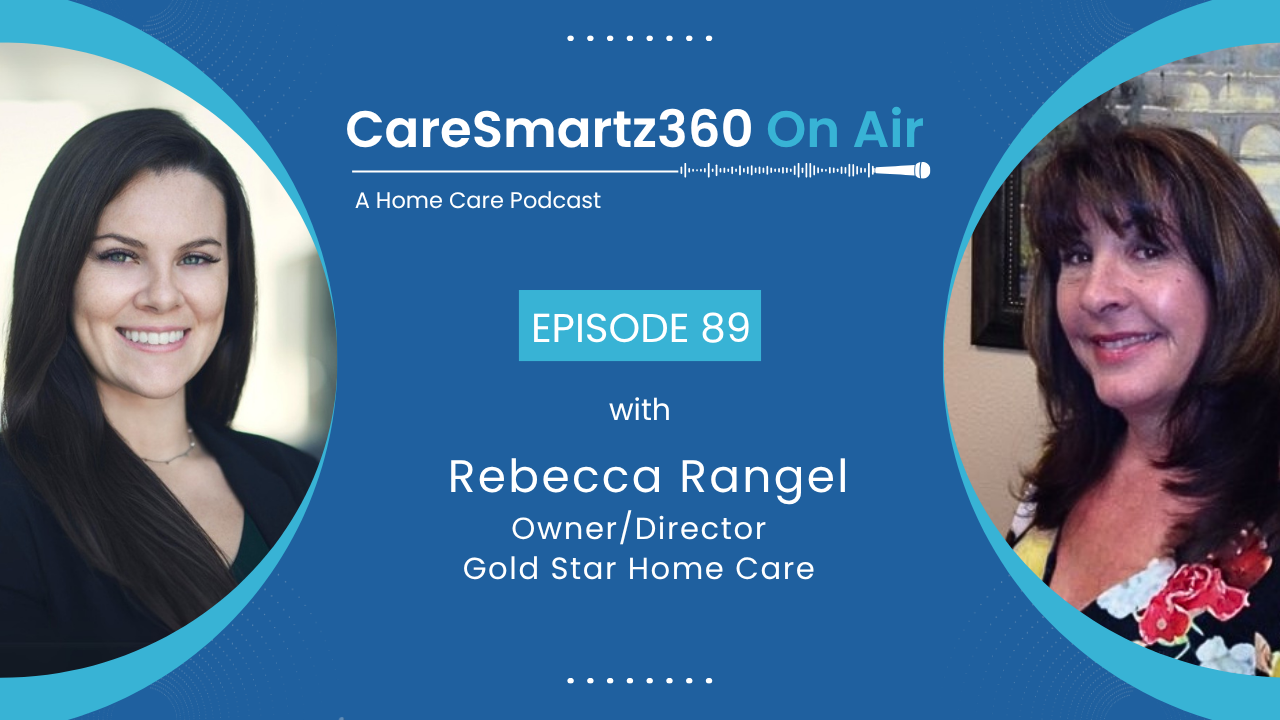


 AI Hub