Prepared to Provide: What Families Face Before Home Care Begins
00:00:09
Hello and welcome to CareSmartz360 On Air. I’m Dennis Gill, Senior Sales Consultant at Caresmartz. See, when families reach out to a home care agency, it often feels like the beginning of their care journey, but in reality, it’s usually the middle or even the end of a long, emotionally charged process. Families are making decisions under pressure. Financial documents aren’t organized. Estate plans may be incomplete. Roles within the family are unclear. And the emotional weight carried by family caregivers is already
00:00:48
heavy before care ever starts. Today we are joined by Douglas Ross, founder of My Family Care Plan with more than 35 years of experience working with families in transition. And Douglas brings a rare upstream perspective, one that looks at how family readiness or the lack of it directly impacts care outcomes, caregiver relationships, and the operational realities home care agencies face downstream. So in this episode, we’ll explore what happens before family calls an emergency, why underpreparedness creates
00:01:30
risk for everyone involved, and how agencies can engage families earlier, more thoughtfully, and with greater clarity. So without taking on the role of financial adviser or therapist, so without wasting any more time, I welcome to this podcast, Douglas. Thank you, Douglas, for your time. >> Thank you, Dennis. I appreciate that. I’m Doug Ross, founder of My Family Asset and Care Planning, and my background sits at the intersection of family assets, estate planning, and care decision-making. Over the years, I’ve
00:02:04
seen families repeatedly arrive at care and legal conversations and decisions too late, overwhelmed, unprepared, and making expensive decisions under stress. What I focus on now is the upstream work helping families, especially women who are often the primary caregivers and decision makers of the family get organized. Ask the right questions earlier and engage the professionals more effectively when care or planning becomes necessary. >> Perfect. Perfect. Thank you for the quick introduction from your side also,
00:02:39
Doc. So I’ll straight away jump in with the first question for you. So from your experience is what are the most common upstream challenges families face before they ever engage a home care agency be it financially emotionally or organizationally. >> Yes families arrive emotionally overloaded financially unorganized and decision fatigued. The real problem families face today is that most families don’t fail because they don’t care. They fail because the system assumes they already know what questions
00:03:11
to ask. What I see most often is not a lack of care, it’s a lack of preparation. Emotionally, families are already exhausted or in crisis when they reach out. Financially, key documents, authority, and funding clarity are often missing. And then finally, organizationally, there’s usually no clear decision maker, no shared understanding among the siblings, no plan for what happens next. By the time home health care enters the picture, families are reacting, not choosing.
00:03:48
>> Okay. And how do those early gaps in preparedness tend to show up later for home care agencies, whether through disruptions, family conflict, caregiver strain, or even operational friction? >> Yes. The family’s unpreparedness becomes the AY’s operational problem. preparedness. It isn’t just about money. It’s emotional alignment, clarity of roles, and knowing who decides what before stress strips families of the best decision, the best judgment. Those early gaps don’t disappear, they surface
00:04:24
downstream. Agencies experience frequent care plan changes, family conflict, inconsistent expectations, and caregiver burnout. Often the caregiver becomes the emotional container for unresolved family stress which isn’t fair or sustainable and operationally it creates friction like last minute changes, billing confusion and strain communication. None of which are really about the quality of care itself. >> Got it. Got it. Got your point. And at intake or admission, what are the early warning signs agencies should listen for
00:05:03
that indicate a family may be overwhelmed or underprepared for care reporting to you? >> Yes, agencies for uh should listen for confusion, conflict, and lack of authority. What’s missing today is a neutral trusted starting place, not a sales funnel where families can orient themselves before being routed to the professional providers. Some early signals are subtle but consistent. If multiple family members are giving conflicting instructions, if no one is clear who has the decision-making authority, or if
00:05:41
questions about payment, duration, or legal authority are vague or avoided. These are signs that the family may be overwhelmed or unprepared, even if they’re well-intentioned. >> Okay. Okay. And what kind of questions can agencies ask? not to overwhelm families but to surface hidden risks and set clearer expectations from the very beginning. What it should be >> uh the key is to ask clarifying questions not technical ones. Agencies don’t need to interrogate families. They need to orient them. Simple questions
00:06:16
like first who is responsible for decisions if something changes. Second, have you talked as a family about what happens if care needs increase? Or third, is there someone we should update to avoid confusion? These questions create alignment without adding pressure. >> Got it. Got it. And anything else? Any other questions that you think the agencies should add from their side or these are the basic things which the agencies can start with? I think communication is the starting point. So
00:06:53
Anything that comes from that discussion, you know, shows trust and relationship and alignment. So you go from there and ask the more professional questions from that point forward. >> Okay. Got it. Got it. And uh next thing is about AI. As AI and automation become more common in homecare, so where do you see technology supporting family communication and planning and where should agencies be especially careful to preserve trust and human connection? >> Yeah, that this is a good one. AI
00:07:30
supports clarity and coordination. Humans carry and develop trust. The best use of AI in care isn’t replacing people. It’s removing unnecessary friction. So humans can show up better. Where we have to be careful is using automation to rush the trust process. >> Families can feel when they’re being processed instead of supported. Technology has been incredibly helpful for organizing information, setting expectations, and improving communication. Where agencies need to be careful is replacing empathy with
00:08:07
efficiency. Families don’t want to feel processed. They want to feel heard. and supported. AI should reduce noise and confusion so caregivers and care managers can spend more time on what truly matters which is trust, reassurance and the human connection. >> So human connection is the key uh for you. >> Correct. >> Okay. And finally uh looking ahead to 2026 we are this at the start of this new year. How do you expect family expectations around preparedness, transparency and shared decision making
00:08:47
to evolve and what should agencies start doing now to stay ahead? >> Yes, love this. Uh families will expect guidance, not just services. The agencies that will win over the next few years are the ones that help families think earlier, not just respond faster. Care care crises don’t start with care. They start with unanswered questions months or even years earlier. Families are becoming more informed and more stressed at the same time. By 2026, they’ll expect transparency,
00:09:28
preparedness, and shared decision-making, not just care delivery. The agencies that succeed will be those who position themselves earlier in the journey, helping families prepare and act as their partner, not just their provider. The agencies that do this now will stand out in a very crowded marketplace. >> Great, great, great. Thank you. Thank you for your answers today for discussing this very important topic with us. And uh to sum up uh this complete topic if you have to just say two to three lines to sum up this
00:10:04
complete session what would be from your side your input regarding this well a few things about AI where I’m seeing the real world examples being used in this space. Um first example is intake and preassessment support. It’s one of the most practical uses of AI helping families organize information before intake. um reducing repetition and emotional fatigue. It is often their families have to repeat the same story to multiple people. So AI is clearly helpful in to the professionals and
00:10:40
family in that space and also care team communication and follows up and follow-ups. Uh we’re seeing AI used to support care teams internally. >> Uh where AI helps without replacing trust in humans. Uh the biggest biggest difference is removing friction, not replacing relationships. Families don’t want decisions made for them. They want clarity before the decisions are forced on them. >> Got it. >> The caution we where we have to be careful is the risk of using automation
00:11:07
to rush families or funnel them too quickly towards a solution. Care decisions as we know are emotional. Technology should slow the right moments down, not speed them up. And finally, one forwardlooking point. I think the next evolution is giving families a neutral starting place. Uh think of it as a calm front door where they can orient themselves before being routed to providers. >> Got it. Got it. Got it. Got it. Thank you. Thank you for your valuable inputs, Doug, today. And uh I know this was a
00:11:45
very short and crisp session today with you. We would love to have a detailed session with you in future on more topics and uh thank you to our lovely audience today. I hope this would be of help to any of the family members that are listening or to the home care agency owners also and we would be planning more and more sessions on these topics in future. Thank you everyone. Thank you, Doug. >> Thank you Dennis.
 12:13 MINS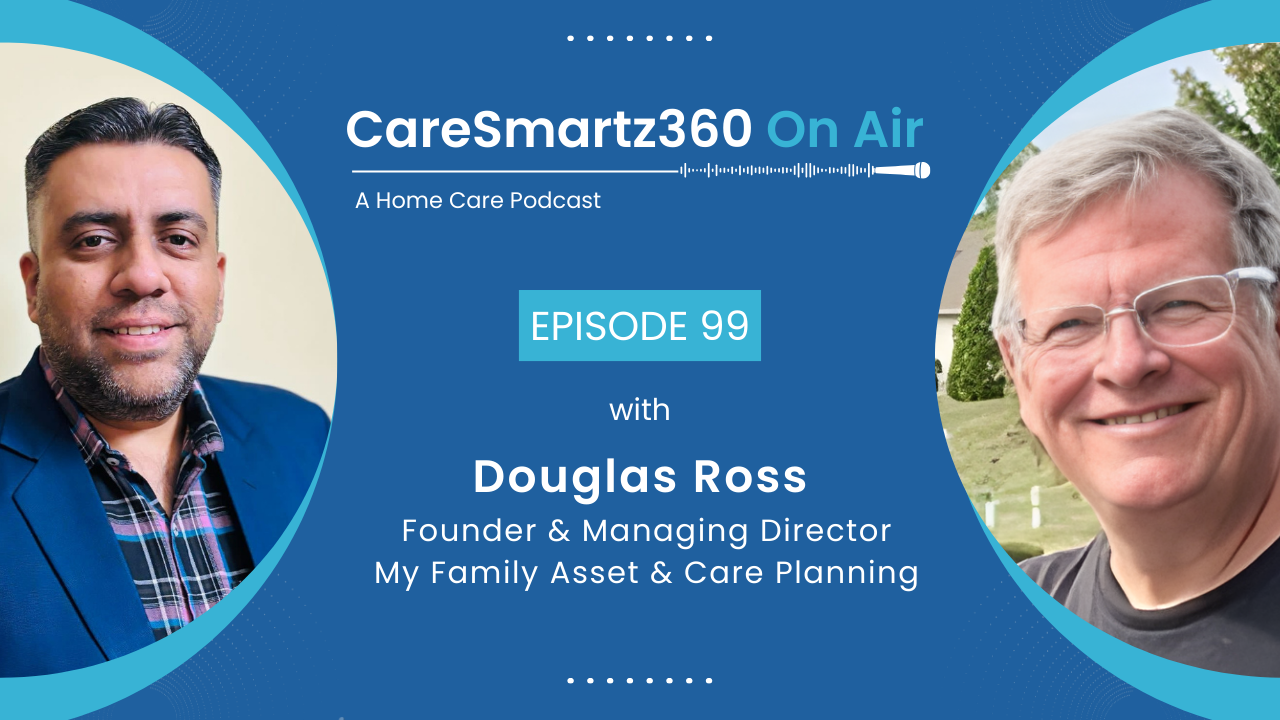


 AI Hub