The Human Side of Care Planning No One Talks About
00:00:09
Hello and welcome to CareSmartz360 On Air. I’m Dennis Gill, Senior Sales Consultant at Caresmartz. Today’s conversation goes beyond checklists and care options. It goes to the heart of caregiving. We’ve been joined by Lindsay Friedman, Founder of LTCareNav, Care Advocate, Author, and someone who’s lived caregiving from every side, professionally and personally. Lindsay has worked in memory care, nursing homes, assisted living, and at home, and she knows how overwhelming care decisions can feel when time is
00:00:50
short and emotions run high. So today she is sharing the humane side of care planning. No one talks about the fear, the guilt, the dignity and the clarity families truly need before the crisis hits. So welcome to the podcast. >> Thank you so much for having me. We’re really glad you were able to take out the time today for our listeners and I hope this session is a very fruitful one and a very knowledgeable one for our listeners and they are I would say more learned about this topic than once the
00:01:28
session is done. Thank you for that. >> No, thank you. >> Okay, so without wasting any time I’ll straight away jump on to our first question for you. Uh so what emotional challenges do families face most when care planning begins? >> I think actually just having that conversation, the realization that somebody might need care is a really hard one to really approach because that means things are changing, people are failing. Um decline is hard. It’s emotional. It’s trying. We never want to
00:02:05
see our loved ones in a place where they start to need care. >> Yeah. >> And and I think that is really what’s so emotional about it is it’s sometimes easier like to pretend it’s not going to happen or maybe it’s not going to get worse. >> And I feel like that’s really the emotional toll that’s keeping people from making the plans up front. Oh, >> okay. Okay. And continuing with this, where does traditional care planning miss the human side of decision- making?
00:02:35
I think the real problem is that most people when they’re creating a financial or estate plan, they’re missing the whole care plan piece. >> And that’s where the biggest problem lies is you think you’re creating a plan to retire, to get old, and most professionals right now are not taking into account what we want as human beings. What will care look like? We are humans. We are going to decline. We are going to get sick. And that part is not just discussed as much and that’s what’s
00:03:10
really being missed. >> Okay. Okay. And according to you, how can home care agencies earn trust during high stress care moments? >> Compassion, understanding. I think really mo I think almost every home care company I’ve met really has great intentions to provide care, but I think you need to acknowledge the entire family in that care unit and really what they’re going through and to have some understanding that it’s hard for everyone and sometimes behaviors from the family may not look as wonderful as
00:03:46
you want and to really try to be patient. Also, I think it’s really fair to set boundaries at the beginning of a relationship between a homecare company and a family. And I think these boundaries set in a tone of compassion before there’s an issue is really going to lay out better outcomes for both. >> So basically taking the family’s trust into contention. I think that would be the foremost thing for them. And uh just one thing I wanted to know and say how long you’ve been into this
00:04:18
caregiving side. Uh how many years? >> I started as a professional caregiver care partner in 1998. >> Oh great. I am 28 years.. >> So you have a lot of experience in this field then. >> Yes. So a long time. >> It’s been a long time. It’s been a long time. Good to know that. Good to know that. And how can agencies help families start care planning earlier before crisis hits? >> I think that’s a really important thing for home careers to look at. And actually at LT Care Nav, we’re trying to
00:04:54
partner with home care companies to give them tools to create a plan. Real clear expectations of what this is going to cost and where it’s really going to fall for a family. and figuring out how to extend it as long as you can is going to be important because the family you’re working with wants to stay at home. They don’t want to transition somewhere else. So, uh, home care companies that are listening, if you reach out to LT Caref, we can actually help give you tools to to help your family long-term care plan
00:05:27
and help them be able to stay with you longer. >> And, uh, I just wanted to know one thing. what exactly healthy nav does if our listeners wanted to know about that what exactly it does. >> We provide free home long-term care plans to families and then match with providers. So on the family end we really try to help them understand what they need, what they want. Most families want to age in place. We try to explain to them what that’s going to cost and hopefully they’re early enough in the
00:05:58
journey that we can help them plan for that over their lifetime and really understand what that’s going to look like. And then the other thing we do is we actually match families in your area with home care providers that meet the same requirements that the home care providers are offering. So we really kind of do some of it . I don’t like the word lead generation because it’s more one-on-one matching. We take the the provider’s profile and the families and we make matches based off of several
00:06:25
criteria. Um, and then we also allow home care companies to create more robust long-term care plans for families that don’t have them yet to help to to say things like, “Listen, here’s an added service. Let us help you understand what this is going to cost and how you can stay in your home and how we can help you stay in your home longer and with us. >> Great, great, great. And according to you, how can AI support care planning without losing empathy and trust? >> So LTCareNav the actual plans are
00:07:02
created all through AI and that is where AI does a really beautiful job. It is so smart. It understands data. It understands it can compare against other health data that we have available. And that’s where we’re using it is really about data analysis to create the plans. But we do use it to match our providers. But we really believe the human side is always going to be the most important piece in caregiving. And that’s why we have partnered with so many wonderful organizations
00:07:38
and we’ve vetted every single one of them. We’ve talked to every human at the helm of those organizations to bring them on. And we can’t forget the human side. I don’t think robots are going to replace humans. Even if they can turn you, they can’t hold your hand and say this is going to be okay, right? So >> we we do not have to not forget the human touch. >> Definitely. Definitely. Whatever AI comes in, human touch is very necessary. >> Yeah. >> Okay. And lastly, what shift must
00:08:11
agencies make by 2026 to support longer, more complex care journeys according to you? >> I actually have two things. One, help your families plan for the cost and help them understand everything. be part of that journey to make sure you fit in there. And then the other thing will be I run another company called Care Bloom and it’s a monitoring technology. I think there are going to have to be some adaptations with technology of how you can monitor and virtually be there in cases where that’s an option because with the
00:08:48
lack of caregivers, right, we still need hours. We still need billable hours and having a way to actually monitor someone without a camera that’s really smart that makes sure you’re really checking in is going to be important part to increase your care capacity. >> Perfect. Uh so thank you for your time today Lindsay. It’s a beautiful work that your organization is doing and I hope it flourishes more and you help more and more people in this part. Thank you. Thank you for your time today.
00:09:27
Thank you from my side also. This is Dennis Gill. I am signing off for today and we hope to meet you soon in the next session then. Thank you Lindsay. >> Thank you.
 09:42 MINS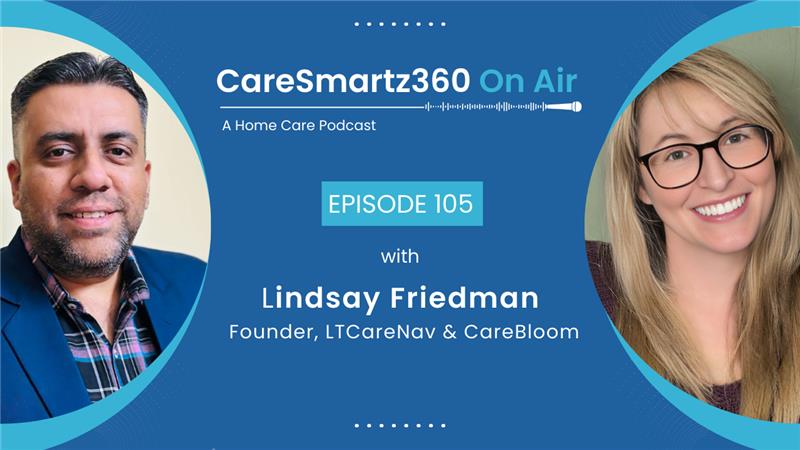


 AI Hub