Why Referrals Don’t Convert to Revenue in Home Care and How to Fix the Operational Gaps
00:00:09
Hello and welcome to CareSmartz360 On Air. I’m Dennis Gill, Senior Sales Consultant at Caresmartz. Most home care agencies don’t struggle because of lack of demand. They struggle because operations can’t keep up. In this episode we have Dionne Roache-Beckford, CEO of Alithior Group, breaks down why referrals stall, intake slows, and revenue slips through the cracks. With 17+ years in healthcare and firsthand agency experience, she reveals how fixing workflows – not chasing more leads – is the real growth lever. So, if
00:00:54
your referrals aren’t converting, this is the conversation you have been missing. Welcome to the podcast, Dionne. >> Thank you. Thank you so much. Thank you for having me, Dennis. And I’m really looking forward to this conversation. Um, like you said, I’m the founder of Alithior Group. I have over 17 years of experience in healthcare and I’m also a former home care business owner. So I’ve seen this from both the clinical side and the operational side >> and that perspective really shapes how I
00:01:29
look at today’s topic. So because when I was operating I had to take a step back and ask if referrals are coming in why aren’t they consistently turning into revenue? >> Okay. >> And what I realized is that it wasn’t always a volume issue. It was how the workflow was being supported. So that’s really what led me to use trained healthcare virtual assistants um specifically in intake scheduling and coordination. >> Okay. >> And once those areas had consistent
00:02:05
support, the biggest shift wasn’t more referrals. It was more of the referrals we already had were actually converting into revenue. >> Okay. Okay. No, good to know that. Good to know that. Now we are really glad that you were able to take out the time today for our listeners and we really hope and we are pretty sure that this would be a pretty fruitful session for all our listeners today. >> Okay. >> Thank you. >> Right. So without wasting any time straight away I’ll jump in with the
00:02:34
First question for you. So uh Dionne, where do referrals typically break down in the homecare workflow? Is it intake, scheduling or followup? So, from my experience, um, referrals don’t usually break in one place. Um, they break between steps. So, it’s not just intake. It’s not just scheduling or followup. It’s the movement between those points. So, I’ve seen this firsthand as a previous um homecare owner and now working with agencies. um a referral comes in, everything looks fine on the surface, the need is there,
00:03:15
The timing is right, and sometimes a caregiver is even available, but there’s a delay internally, and by the time scheduling gets involved, the urgency has shifted and or the family has already started exploring other options because it’s an urgency for them. So, if you don’t respond in a timely manner, you know, they’re going to move on. So the referral did not fail. We see that it just lost momentum and that’s where revenue starts slipping and because every delay like we I just said every
00:03:49
A gap every missed handoff is an opportunity that doesn’t convert. And what we’ve consistently seen also is that when there’s dedicated support in that front end process, especially through trained healthcare virtual assistants like we use, those referrals move more consistently and more of that revenue is actually retained. >> Okay. Okay. And what are the most common operational mistakes that delay converting referrals into active clients? So there are a few patterns I’ve seen
00:04:25
over and over again. One is timing. Very important timing. Even small delays can change the outcome of a referral. Families are making decisions quickly. This is urgent for them. Another is how information slows. Um intake may capture the referral, but if that information isn’t structured for the next step, things slow down and scheduling has to go back. clarify, ask questions, and that delay matters. And then there’s a lack of alignment. Different roles are doing their part, but not as one
00:05:02
continuous process. So, if it’s all over the place, that doesn’t work. And finally, lack of ownership. Multiple people may touch the referral, but no one is clearly responsible for moving it forward with urgency. >> Okay? And that’s something I experienced myself as an owner and it’s something I now help agencies um address by placing trained healthcare virtual assistants in those exact parts of the workflow so there’s consistency, accountability and flow. >> Perfect. Perfect. And uh how does poor
00:05:39
intake coordination directly impacts revenue and caregiver utilization according to you? So what we’ve seen you said caregiver. So what happens is caregiver utilization sometimes the caregivers they’re available but if you don’t have the proper structure um scheduling um you definitely will not have an autonomous process. So, I’ve seen agencies where caregivers like myself have experienced that caregivers are available, ready to work, but they’re not being placed consistently. And at
00:06:18
At the same time, referrals are coming in. So, everything looks like it should be working, but it’s not connecting. And what changed wasn’t the number of referrals for us, it was how we handled those referrals. Um so once we had consistent support, consistent intake, consistent coordination, the difference was clear. We had better follow-ups. It was happening faster. Um information was moving more smoothly and scheduling had what it needed earlier. So as a result, more referrals actually converted into
00:06:55
active clients. Um, it wasn’t about getting more. It was about not >> tossing what was already there. Just so we added structure, better support, better structure. >> Okay. And so, what should agency owners fix first? Like if they’re seeing strong referrals but weak conversions, what should be the first thing? So what we’ve consistently seen both in my own experience like I keep saying and now across agencies is that when we have better systems putting in place um trained like we use trained healthcare
00:07:31
virtual assistants okay >> um especially in intake intake and coordination um that is because as people call in you’re getting the referrals intake is the most important thing um so when we place our staff that’s trained and they target that especially first. Uh then there’s coordination. There’s a noticeable shift. >> Um it’s not about adding more volume. It’s about stabilizing how that volume is handled. And so referrals it’s going to move faster, right?
00:08:02
>> Um gaps are going to be reduced. >> Caregivers are going to be placed more consistently and revenue becomes more predictable. So the difference is not more volume. Mhm. >> It’s having the right support to handle the volume you already have. >> Okay. Okay. Okay. And the most important topic nowadays, where do you see AI realistically improving referral to revenue conversion in homecare operations? >> So AI has its place definitely we’ve seen that it’s helpful, but it’s not the
00:08:37
only thing. Um it’s it should be supported with workflow, proper proper workflow. Um it can help with organization. We see communication. It helps with documentation, >> but it doesn’t replace structure. That’s the most important thing. And once structure and AI go together, I think that’s a winning ticket, right? So if the process isn’t clear, >> um AI just speeds up something that isn’t aligned. Once you have alignment with AI, I think a supporting tool, not
00:09:10
the solution itself, but once we put both of them together, then it works. >> Okay. And finally, looking ahead to 2026, already we are past quarter first. What operational capabilities will separate agencies scale from those that stall? So going forward, the agencies that grow are going to be the ones that have operational clarity, operational stability, operational structure. We just can’t move past that, you know, not just more referrals because you can get a ton of referrals. What do you do with
00:09:48
it? >> Um it’s not going to convert. It’s not going to bring revenue. Um the ability is that there needs to be an ability to consistently convert those referrals the appropriate way. Um less friction, less delay, more consistency and the demand is already there. It’s there. The difference is how well and that demand is handled. Um in many cases that comes down to having the right support in place in the areas that impact conversions the most. So be organized, get your support, the right support, be
00:10:26
aligned, um make a good have a good structure and everything will fall into place and you will see that your revenue and your operations will stabilize and scale. >> Okay. So I think everybody heard that to be structured be operational uh operational capabilities should be on the top and the results will definitely come out for all of you. Okay. So thank you. Thank you Dionne uh for your time today. I know this was a very small session today. Uh uh we would definitely love to have more conversations with you in future more
00:11:00
detailed one on different topics that we can cover with you. But today was a very fruitful session for our listeners and I hope uh they benefit out of this. Thank you. Thank you for your time. >> Thank you so much for having me. I appreciate the opportunity. Thank you. >> No problem. Thank you to all my listeners today. So this is uh Dennis Gill signing off today and I’ll shortly be back with you then. Thank you.
 11:28 MINS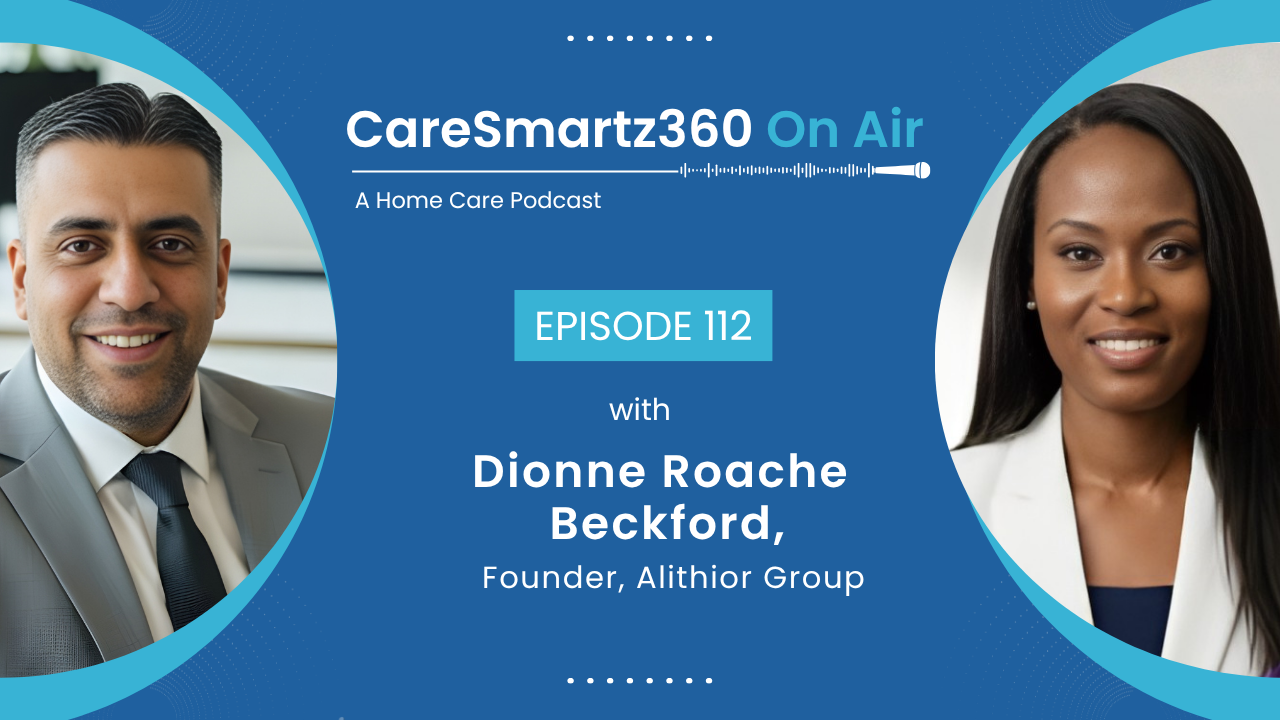


 AI Hub