Inside the Referral Engine of a Home Care Franchise
00:00:09
Hello and welcome to CareSmartz360 On Air. I’m Dennis Gill, Senior Sales Consultant at Caresmartz. Kyler Krogh knows what home care growth is, not just about getting referrals. It’s about building real relationships that last. So as the Director of Business Development at Hallmark Homecare, he works closely with healthcare facilities, caregivers, clients, and community partners to create stronger care connections and sustainable growth. So, in this episode, Kyler joins us to discuss what really
00:00:47
happens behind successful referral partnerships and how trust drives long-term business growth and why relationship first outreach is becoming essential in today’s homecare industry. Welcome to the podcast, Kyler. Thank you for having me, Dennis. I appreciate it. >> Thank you. We are really glad that you were able to take out the time today for our listeners and I hope this is a pretty fruitful and knowledgeable lesson for all the listeners all over the world. >> Yeah, definitely.
00:01:19
>> Okay, so without wasting any time, I’ll straight away jump in with my first question for you. Uh so kind of what makes a healthcare referral partnership actually last in homecare? >> Yeah, good question Dennis. Um, I think one of the most important things is that you show up when these referral partners trust you. They’re taking their client, their patient, and they’re sending them off to you. And once they’re out of the facility, they really can’t deal with them anymore. And they expect you to
00:01:50
take good care of them to be on time to do what you say you’re going to do, as well as update them on how they’re doing because they really have no way to stay in contact with them besides you. And I think that’s a really big thing is keeping that communication going throughout that relationship with that client. >> Oh, okay. Perfect. Good to know that. And uh what do hospitals and healthcare facilities expect from home care agencies today? >> Yeah, good question as well. Um I think
00:02:18
a big thing is that just the same day responsiveness. If you get a call at 9:00 a.m. um from a hospital and that somebody needs to go home at noon, you better get over there in an hour or two and meet with the social worker or case manager, meet with the family, understand the needs from both ends, and then you need to set something up either same day or next day. Um I think oftentimes this happens on a Friday. People want to get out before the weekend as I’m sure you know. Yeah. and just being there on time, being there
00:02:47
and being that voice that the family and the social worker can trust. >> So time management is really important over here. >> Absolutely. Yeah. Being there when they need you. >> Being there when they need you. Correct. >> Okay. Absolutely. And uh what are the biggest referral mistakes according to you home care agencies make today? >> Yeah. I think you can look at this from two perspectives. One of them is trying to get the referrals to begin with. Mh. >> And I think a lot of um people that are
00:03:15
out on the streets, they’re pounding the pavement. They want to drop off gifts. They drop off donuts, pens, and some of their merchandise. And I think that really frames you as a giftgiver and not a solution. >> Um but the way you need to frame this is that, >> you know, of course you can bring gifts to thank them or to celebrate them, but you know, providing the solution and being the person that can actually deal with their problems as opposed to just dropping off a treat for that day. And I
00:03:41
I think that’s a big mistake that a lot of people make. As opposed to providing their solution, they provide treats as opposed to solutions. Yeah. >> Oh, so providing actual solutions is the right thing. Absolutely. Agencies. >> Yeah. You want to solve their problems, not give them more. >> Yeah. Be the problem solver, guys. Okay. And how does caregiver reliability impact referral trust and growth? >> Good question. Um, I think this is probably the number one issue that home
00:04:09
care agencies deal with is having their caregivers show up on time, having good caregivers show up, and keeping that continuity of care. And something that we really focus on at Hallmark is having that continuity of care, having the same caregivers show up for the same shifts, the same times. And I think especially with dementia patients and Alzheimer’s, this is something that really helps their care throughout the process. >> Definitely. and then having the social worker or case manager or anyone from the hospital
00:04:38
refer out to you and they know that your caregivers are there. They can hear back from the family about the quality of care as well as the consistency and I think that really impacts my trust and growth positively. >> Oh okay. So providing the right caregivers for the same patient. >> Absolutely. Yeah. >> Again and again. >> Absolutely. >> Okay. Now the most talked about thing. How can AI help agencies strengthen referral relationships without losing their human touch? Because that’s also
00:05:07
very necessary. >> Definitely, that’s I think a big issue people make is they hand over 100% of the delegation to AI. >> AI and AI is a tool that I use every single day, honestly. Um, >> and whether it be for planning my route to what hospitals I’m going to go to to be efficient with that, >> or sending out emails or honestly just scraping through my phone and seeing who has reached out, who do I need to get back to. >> Um, but I think the number one important
00:05:38
The thing is that you use it as a tool and not as a solution. Um, what I mean by that is when you’re drafting emails, it can be great to set a starting point for them, but if you’re going to use that to create the whole thing, you’re going to lose that human touch like you said, Dennis. >> And, you know, going through and making sure this is something you would say. It doesn’t have any AI dashes in there or anything like that >> because that really is an obvious sign that you’re not taking the time to
00:06:09
respond to these people personally and you’re just using a machine to do it for you. Yeah. And whenever you’re replying to the email because I also use uh AI for email by the everybody everybody uses it and yes the time uh I do make some personal changes to it so that the other person they they do become aware that if it’s completely through machines totally AI or something has been added from your side. So that does change, it does change small things. Yeah >> definitely.
00:06:38
>> Mhm. And uh lastly, what changes do you expect in home care referrals and partnerships in 2026? >> Yeah. Um, another great question. One thing I think will change is that hospitals will start to implement AI and I believe they already have, but they’re going to use this to kind of track patient outcomes. So, you know, whether it goes to Hallmark Homecare or goes to a different home care agency, they’re going to use AI. They’re going to put the data in there. Here’s what happened.
00:07:09
Here’s if they are readmitted to the hospital. Here’s the kind of success we’ve had with them. And they’re going to use that to help influence their decisions. Um, and using these metrics could honestly shape how they refer to us or they refer to another agency. Um, and I think that a big thing for hospitals, as you know, is readmissions into the hospital. And they’re going to use this to cut down on that because hospitals do not want that. They can get penalized for that for sure.
00:07:38
>> Yeah. And what do you think personally? Does this thing that hospitals would be using AI for referral sources, would that be a good thing or not? What do you what do you think personally on that? >> Personally, I think it’s good. I think these case managers and social workers are already overworked as it is. They have a ton on their plate and use this to actually send out a personal message to home care agencies rather than giving them three people and whoever jumps on it first gets it. This could help make
00:08:08
It is more personal. But I think they need to be careful on how it’s used. And like we mentioned earlier, it needs that human touch to stay genuine and to actually achieve a good result rather than just mass emailing out or accidentally sending to somebody else. Mhm. Because in our system also CareSmartz360 we do have this AI thing that caregiver matches the caregivers with the clients. So we also use that feature but yes definitely a thing is required that when we do tell the agencies that please do
00:08:37
have a word with the caregivers before you assign that. So that small thing is always there. So please listeners please take care of that thing. It should always be there. The human touch should not be missed. >> Absolutely. I agree Dennis. >> Okay. So uh thank you. It was a very small session today and uh we would definitely love to have more sessions with you in the future and uh have more inputs from your side so that our listeners can get benefit out of that and we will be definitely in touch
00:09:07
with you for future references. >> Absolutely Dennis, I appreciate it. I’d love to be back on >> surely we would love to have you back on our show and uh thank you. Thank you everyone. Uh this is Dennis Gill. I’m signing off for today and I will be back in touch with you shortly then. Thank you everyone.
 9:29 MINS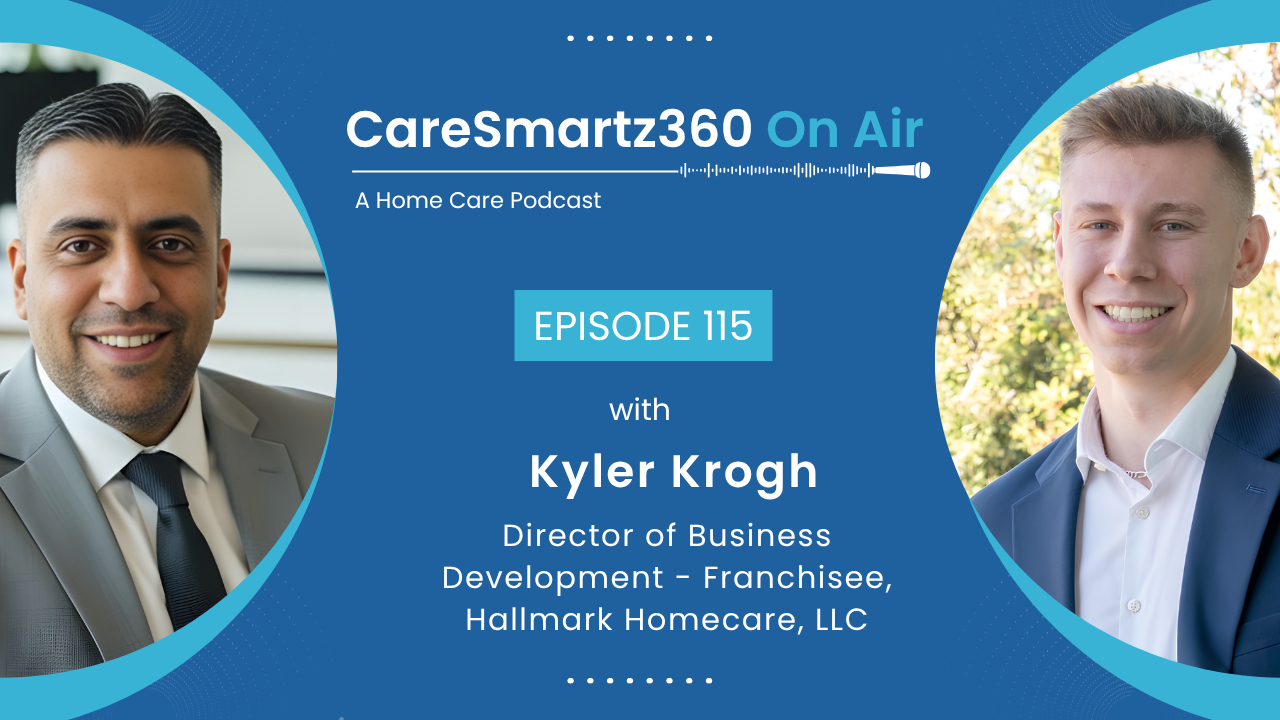


 AI Hub