Blog

A caregiver calls off on Thanksgiving morning. Another client’s family requests a later visit, and your first-choice backup is already covering someone else.
Holiday scheduling in home care means coordinating client visits, caregiver availability, time-off requests, assignments and backup coverage. Start collecting preferences in late October or early November. Explain assignment and pay policies upfront and confirm coverage before each holiday.
For non-medical home care owners, administrators and schedulers, the goal is to maintain dependable care while protecting caregivers from repeated last-minute demands.
Care needs continue through the holidays. Clients may depend on visits for meals, medication reminders, mobility assistance, companionship or supervision. Family travel and visiting relatives can also change requested hours and familiar routines.
Caregivers are balancing their own commitments. Without a seasonal plan, the same dependable employees can end up covering Thanksgiving, Christmas and New Year’s gaps.
Activated Insights reports that caregiver turnover has flattened at around 75 percent, down from a peak near 80 percent in 2023. This does not measure holiday-related turnover. But it provides context for why manageable workloads and fair scheduling deserve attention.
Review Thanksgiving, Christmas Eve, Christmas Day, New Year’s Eve and New Year’s Day, including overnight visits crossing holiday boundaries.
Ask:
Use those findings to identify assignments that need earlier confirmation, stronger backups, or advance introductions.
Collect preferences for the whole season together. This gives caregivers visibility into upcoming assignments and gives schedulers time to resolve competing requests.
| When | What you do | What you should have |
|---|---|---|
| Late October to early November | Request caregiver availability and time-off preferences. Share pay rules, rotation principles, response deadlines and change procedures. | Documented preferences and clear expectations. |
| Early November | Confirm client visits, family plans, requested hour changes and cancellation notice requirements. | Updated client needs. |
| Mid-November | Resolve missing responses, build assignments and identify qualified backups. | A draft seasonal rotation. |
| About ten days before Thanksgiving | Publish Thanksgiving assignments and the planned Christmas and New Year’s rotation where possible. Request caregiver acknowledgment. | Published assignments with confirmation status. |
| Before each holiday | Follow up on unacknowledged visits. Reconfirm backups, client changes, travel arrangements and substitute handoffs | Confirmed coverage and contingency arrangements. |
| Throughout the season | Review open visits, scheduled and actual hours, travel feasibility, rest and caregiver concerns. | Earlier visibility into gaps and workload. |
| Early to mid-December | Update Christmas and New Year’s assignments using Thanksgiving experience and recorded preferences. | A balanced and updated rotation. |
| First week of January | Review coverage, workload, communication and feedback. | Improvements documented for next season. |
An assigned visit is not the same as a confirmed visit. Track whether the caregiver has acknowledged the assignment and resolve unanswered confirmations before the holiday.
Adjust these planning targets for your agency’s size, commitments and applicable requirements.
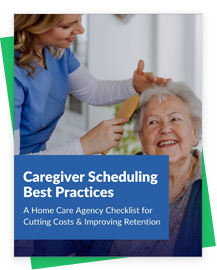
A reliable holiday schedule takes more than filling open shifts. It requires early planning, confirmed assignments, realistic workloads and backup coverage. Use these caregiver scheduling best practices to assess your agency’s approach before the holiday rush.
A written policy should explain how preferences are considered, how competing requests are resolved and when assignments become final.
The Home Care Alliance of Massachusetts highlighted transparent policies, clear rotations and ongoing communication in its holiday staffing discussion. It also noted that some employees prefer holiday work.
| Approach | When it helps | What to watch |
|---|---|---|
| Volunteers first | Caregivers prefer particular holidays or additional earnings. | Volunteers becoming overextended. |
| Rotation | Less-preferred assignments need to be distributed over time. | Changes in staffing and client needs. |
| Seniority-based preferences | An established policy gives longer-serving employees priority. | Newer caregivers repeatedly receiving unwanted shifts. |
| Lottery for ties | Equally suitable caregivers request the same day off. | Random selection overriding qualifications or continuity. |
Ask for volunteers first, rotate remaining assignments and document a tie-breaking process. Keep a record of preferences and previous assignments rather than assuming every holiday shift is unwanted.
Share holiday rates and eligibility rules with the initial availability request. Define qualifying dates and hours, including overnight visits crossing holiday boundaries.
Keep caregiver compensation separate from client holiday charges. Communicate each through the appropriate policies or agreements.
A familiar caregiver may be especially important for a client who depends on consistent routines, communication approaches or supervision.
Explain how continuity affects assignment decisions. Discuss exceptions with the caregiver while protecting client privacy and considering alternative qualified coverage.
A caregiver worked Thanksgiving and requests Christmas off. Another volunteers for Christmas but has not supported the client before.
The scheduler checks qualifications, availability, travel time and suitability for the care plan. If the match is appropriate, the agency arranges an introduction, completes a handoff, confirms the assignment and identifies a backup.
If the match is unsuitable, the scheduler considers other qualified options and discusses alternatives. Client needs guide the decision, while caregiver preferences remain part of the process.
Fair scheduling is one part of building a strong caregiver workforce. Recognition, support, and thoughtful retention strategies matter, too. Explore strategies to strengthen your approach.
Your holiday coverage plan should identify:
Confirm which visits each backup can realistically cover. Check availability, qualifications, location, travel time and familiarity with the client’s needs.
Explain contact methods, response expectations and compensation arrangements. Confirm requirements for restricted on-call time and any work performed; a standby incentive alone does not settle those questions.
Office staff or coordinators should cover visits only when qualified, authorized, appropriately screened and prepared to follow the care plan.
Do not assume a companionship visit is automatically lower risk. It may provide essential supervision or support.
Base contingency decisions on documented needs, time-sensitive assistance, available alternatives and applicable requirements. Any change should follow the care plan, service agreement, payer requirements and agency procedures with required agreement or authorization.
For immediate danger or urgent health concerns, follow the client’s emergency plan and appropriate emergency procedures.
Before a replacement visit, provide relevant information through approved, secure channels:
Where practical, arrange an introduction before the holiday. A name on the schedule does not replace a proper handoff.
Keep this checklist in your approved scheduling system or secure agency workflow.
| Check | What to confirm |
|---|---|
| Client needs | Visit time, duration, care requirements and agreed changes. |
| Assignment | A suitable caregiver is assigned. |
| Acknowledgment | The assigned caregiver has confirmed the visit. |
| Backup | A qualified alternative is available for the relevant hours. |
| Workload | Hours, travel, rest and potential conflicts have been reviewed. |
| Handoff | Substitute instructions and access details are available. |
| Communication | The client or authorized representative knows about changes. |
| Escalation | Staff know whom to contact, when to escalate and which procedures to follow. |
Monitor scheduled and actual hours throughout the season, including work across clients and locations, travel between visits and changes that extend the day.
Before assigning extra work, make sure to confirm applicable overtime requirements, employee classifications, travel-time treatment and holiday premium calculations with a qualified payroll or HR advisor.
Practical safeguards include:
Caregivers should be able to decline optional extra shifts without pressure. Make voluntary requests distinct from existing work commitments and avoid treating dependable staff as the default solution to every gap.
Recognition should accompany fair compensation, manageable assignments and responsive supervision. A thank-you cannot substitute for rest or appropriate staffing.
Repeated holiday assignments and last-minute coverage requests can put pressure on your most dependable caregivers. Explore these caregiver retention strategies to strengthen your approach.
Send an early holiday notice explaining how schedules will be confirmed, how changes should be requested and whom to contact outside office hours.
Include planned visits, substitute arrangements where known, agreed holiday charges, cancellation procedures and the holiday contact number.
Communicate rate changes in advance and obtain required agreement or authorization. For payer-funded services, verify billing requirements rather than assuming holiday charges apply.
Record changes in the scheduling workflow so the assigned caregiver and coverage coordinator receive the same information.
Holiday scheduling requires your team to identify suitable caregivers, assess workload, and follow up on coverage as plans change. CareSmartz360’s home care scheduling software supports these tasks:
| Holiday scheduling task | Relevant capability |
|---|---|
| Identify replacement options | AI Smart Scheduler helps coordinators identify suitable caregivers by considering availability, qualifications, preferences, proximity, cost, continuity, and travel time. |
| Assess additional assignments | Potential overtime and scheduling-conflict flags help your team review the impact before assigning visits. |
| Follow-up on upcoming shifts | AI Voice Bot supports caregiver availability confirmation calls, reducing manual follow-up. |
Treat confirmation responses and unresolved assignments as separate information to review in your agency’s workflow.
Your agency remains responsible for holiday policies, approved assignments, client-specific decisions and backup arrangements.
Use consistent definitions and compare results alongside holiday demand. Raw counts alone can be misleading when visit volume changes.
| Measure | How to use it |
|---|---|
| Unfilled visit rate | Divide visits that remained unfilled by the total no of planned visits requiring coverage for the period. Then multiply by 100. Track partially covered visits separately and use the same criteria for each holiday. |
| Late call-off rate | Compare late call-offs with scheduled assignments using a consistent definition of ‘late.’ |
| Time to fill | Measure the time frame from an open-visit notification to a confirmed replacement. |
| Overtime share | Review OT hours alongside total worked hours and individual hours. |
| Confirmation gaps | Count assignments still unacknowledged at your confirmation deadline. |
| Caregiver feedback | Ask whether assignments felt fair, rest was adequate and optional requests did not feel forced. |
| Client and family feedback | Review communication, substitute introductions and continuity concerns. |
Document what will change, who owns it and where next year’s scheduler can find the findings.
A Dependable holiday coverage comes from early planning, transparent decisions, prepared backups and attention to workload. The January review makes those practices easier to repeat.
Download Blog

 AI Hub


